
 Deutsch

How long do laser eye surgery results last?
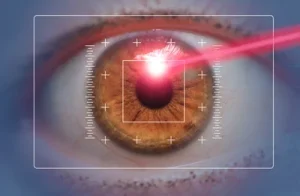
Short answer: The change made to the cornea during laser eye surgery is intended to be permanent. That does not mean your eyesight is guaranteed to remain identical for life. Later changes can result from further refractive development, presbyopia, cataract or other changes elsewhere in the eye.
People considering laser vision correction understandably want to know whether the result will still be useful after ten, twenty or more years. The evidence-based answer is reassuring but nuanced: modern refractive laser procedures can provide highly stable long-term outcomes in carefully selected patients. Lifelong freedom from every type of glasses cannot be promised, because the cornea is only one part of a living eye that continues to age.
What remains permanently changed after laser eye surgery?
Laser eye surgery changes the eye’s focusing power by reshaping the cornea. With SMILE Pro, a precisely calculated lenticule is created inside the cornea and removed through a small incision. During FemtoLASIK, an excimer laser reshapes tissue beneath a flap created by a femtosecond laser. With PRK, reshaping is performed at the corneal surface. The tissue that is removed or reshaped does not simply grow back into its original optical form.
The anatomical corneal correction is therefore permanent. What is not permanently fixed is every future refraction measurement. The natural lens, axial length of the eye, tear film and retina can change independently of the treated cornea. This distinction is essential when discussing how long a result lasts.
What do long-term studies show for LASIK, PRK and SMILE?
A systematic review of long-term outcomes after PRK, LASIK and SMILE evaluated studies with at least ten years of follow-up for PRK and LASIK and at least five years for SMILE. Within the treatment ranges recommended by the German Commission for Refractive Surgery, the review found no clinically significant regression. Effectiveness was more likely to decline over time after particularly high corrections. No procedure showed clear superiority in direct long-term comparison.
These findings require context. Many long-term studies followed patients treated on earlier laser platforms, while diagnostics, software and surgical planning have continued to improve. SMILE is newer than PRK and LASIK, so fewer multi-decade studies are possible. A shorter evidence timeline does not itself mean inferior durability; it reflects the age of the technology.
| Procedure | Permanent change | Long-term evidence | Important context |
| SMILE / SMILE Pro | A lenticule is permanently removed from within the cornea. | Multi-year studies show stable outcomes; follow-up is shorter than for PRK/LASIK because the method is newer. | Flapless. Suitability and starting prescription remain decisive. |
| FemtoLASIK / LASIK | Corneal tissue is permanently reshaped with an excimer laser. | LASIK studies include follow-up of at least ten years. | Higher starting corrections may be more likely to show later refractive change. |
| PRK / TransPRK | Corneal tissue is permanently reshaped at the surface. | PRK has very long follow-up, including studies extending to 18–20 years. | Slower early recovery; long-term stability when appropriately indicated. |
| PRESBYOND | The cornea is individually shaped to extend the range of focus. | The corneal profile remains, but the natural lens continues to age. | Later near-vision change does not automatically mean regression of the laser treatment. |
Context based on the systematic long-term review and current clinical patient guidance; individual outcomes vary.
A small 20-year study of corneal morphology after PRK found preserved long-term corneal structures and good corrected visual acuity in eyes originally treated for low to moderate myopia. Such research is informative, but its sample size and the technology used at the time limit how directly it can predict an individual result today.
Why can eyesight change years later?

1. Regression or further refractive change
Regression means that part of the corrected prescription becomes noticeable again over time. It does not mean the whole operation has reversed. It may be more likely after high starting prescriptions, when refraction was not fully stable before surgery, or with certain individual healing responses. A small change does not automatically justify further surgery; a weak pair of glasses for selected tasks may be the better option.
2. Presbyopia is not a return of the original prescription
From the mid-forties, the natural lens gradually loses its ability to focus at close range. This age-related near-vision loss, or presbyopia, arises mainly in the lens rather than the laser-treated cornea. A person may therefore need reading glasses after a successful myopia correction even though distance vision remains stable. The National Eye Institute describes presbyopia as a normal part of ageing that usually becomes noticeable after age 45.
For suitable patients, PRESBYOND Laser Blended Vision may reduce dependence on reading glasses. The natural lens still continues to age, however, so identical near vision for life cannot be guaranteed.
3. The natural lens may change because of cataract
The natural lens can become cloudy with age. A cataract may cause blurred vision, glare, faded colours or frequently changing prescriptions. This is not the laser treatment wearing off; it is a new change in a different part of the eye. Cataract surgery remains possible after laser vision correction, but the cataract surgeon must be told about the previous procedure.
4. The ocular surface and other eye disease affect visual quality
An unstable tear film can cause fluctuating or intermittent blur even when refraction has changed very little. Conditions affecting the lens, retina, macula or optic nerve may also reduce vision later in life. New symptoms should therefore be examined rather than assumed to be regression. LASIKWELT’s detailed guide explains the recognised risks and side effects of laser eye surgery.
Which factors support long-term stability?

- A stable prescription before surgery: Progressive refractive error can continue to change after treatment.
- Thorough suitability testing: Corneal shape and thickness, tear film, pupils, lens, retina and overall eye health must be assessed together.
- Realistic treatment limits: For very high corrections, another procedure may offer a more appropriate risk-benefit profile than maximum corneal treatment.
- Age and natural-lens status: The long-term visual goal should be planned differently when presbyopia or early cataract is present.
- The right procedure rather than a universal ranking: No single method is automatically the most durable for every eye.
- Structured aftercare: Follow-up helps identify healing issues, ocular-surface problems and refractive change early.
Both the German KRC recommendations and the Royal College of Ophthalmologists patient guide emphasise stable starting measurements, comprehensive assessment, individual procedure selection and realistic expectations.
What does “permanent” mean at different ages?
In your twenties and thirties: With a stable prescription and healthy eyes, distance vision may remain stable for many years. Future presbyopia is not prevented.
From around forty: Early presbyopia must be included in the treatment plan. Excellent distance vision does not automatically mean spectacle-free near vision.
Later in life: The condition of the natural lens becomes increasingly important. If cataract is developing, a lens-based procedure may be more appropriate than corneal laser treatment.
Can laser eye surgery be repeated?
If a clinically relevant and stable residual prescription or regression remains after complete healing, a laser eye surgery enhancement may be considered in selected cases. Corneal thickness and shape, the size of the refractive error, ocular-surface health, age and the cause of the change all need to be reassessed. Retreatment is not automatically possible and is not always appropriate for a small deviation.
The clinician must first establish whether the cornea is actually responsible. A second corneal treatment would not correct presbyopia caused by the natural lens, cataract or retinal disease. The FDA patient information also stresses that glasses or additional treatment may still be needed after refractive surgery and that medical guarantees are not realistic.
Laser eye surgery and future cataract surgery
Previous laser vision correction does not prevent later cataract surgery. It does alter corneal power, which can make calculation of the replacement lens more complex. If possible, keep your preoperative prescriptions, corneal measurements and treatment report, and tell any future eye surgeon about the laser procedure. The Royal College of Ophthalmologists likewise advises patients to disclose previous laser vision correction during later eye care and cataract planning.
Conclusion: the correction remains, while the eye continues to age

SMILE Pro, FemtoLASIK and PRK permanently reshape the cornea. Long-term evidence shows high stability in medically suitable eyes, although particularly high starting corrections may be more likely to change over time. Needing glasses later does not automatically mean that laser eye surgery has worn off. Presbyopia, natural-lens changes and other age-related factors are often responsible.
An individual prognosis is possible only after a complete examination. You can read more about expected laser eye surgery results and the current cost of different laser procedures on the relevant LASIKWELT pages. To discuss whether laser vision correction may be suitable for your eyes, contact LASIKWELT Laser Eye Centre in Cologne. An initial screening does not replace the full medical preoperative assessment.
Frequently asked questions
Does laser eye surgery last for life?
The corneal change is permanent. Lifelong unchanged vision cannot be guaranteed because refraction, the natural lens and other eye structures may continue to change.
Can myopia return after ten or twenty years?
Some refractive change is possible, particularly after high starting prescriptions or if the prescription was not fully stable before surgery. This does not mean that the cornea has completely returned to its original shape.
Which laser eye surgery method lasts longest?
Long-term comparisons have not shown clear superiority for PRK, LASIK or SMILE. Durability depends more on suitability, starting prescription, diagnostics and individual biology than on a universal procedure ranking.
Why might I need reading glasses after successful laser eye surgery?
Usually because of presbyopia. It results from reduced flexibility of the natural lens and is not automatically regression of the treated cornea.
Can laser eye surgery be done twice?
In selected cases, yes. The cause and stability of the change, remaining corneal tissue and ocular-surface health must first be reassessed.
Does cataract reverse previous laser eye surgery?
No. Cataract affects the natural lens and can alter visual quality while the corneal correction remains in place.
Medical sources
- PubMed: Systematic review of long-term outcomes after PRK, LASIK and SMILE (2022)
- PubMed: 20-year follow-up after PRK (2019)
- German Commission for Refractive Surgery (KRC): Recommendations
- Royal College of Ophthalmologists: Laser Vision Correction – Patient Information
- National Eye Institute: Presbyopia
- National Eye Institute: Cataracts
- S. FDA: LASIK risks and limitations
Last updated: August 2026
Author: LASIKWELT Editorial Team
Medically reviewed by: LASIKWELT Medical Team
Published: 04.09.2026
Medical disclaimer: This article provides general information and does not replace an individual examination or consultation with an ophthalmologist.


