SMILE Pro Laser Eye Surgery in Cologne – ZEISS VISUMAX 800
SMILE Pro is a modern, minimally invasive form of laser vision correction. At LASIKWELT in Cologne, treatment with the ZEISS VISUMAX 800 is planned around the anatomy of each eye and the patient’s individual visual needs.
Medically reviewed by Dr Susanne Öner Consultant ophthalmologist · Last medical review: 14 September 2026 This page provides general information and cannot replace a personal eye examination, medical advice or informed consent.
A modern, minimally invasive route towards life with less dependence on glasses and contact lenses
SMILE Pro is part of the latest generation of refractive laser eye surgery. It combines the small-incision SMILE technique with the advanced ZEISS VISUMAX 800 femtosecond laser.
At LASIKWELT in Cologne, technology is only one part of the decision. Detailed diagnostics and an individual treatment plan are equally important because no single procedure is right for every eye.
For suitable patients with myopia, myopia combined with astigmatism and, in selected cases, hyperopia, SMILE Pro may offer a modern and minimally invasive option for correcting refractive error.
SMILE stands for Small Incision Lenticule Extraction.
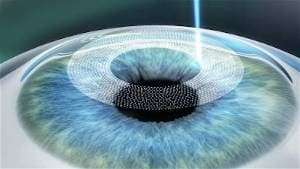
Unlike LASIK, the procedure does not require a conventional corneal flap. A femtosecond laser creates a precisely calculated disc of tissue, known as a lenticule, within the cornea.
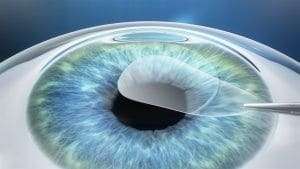
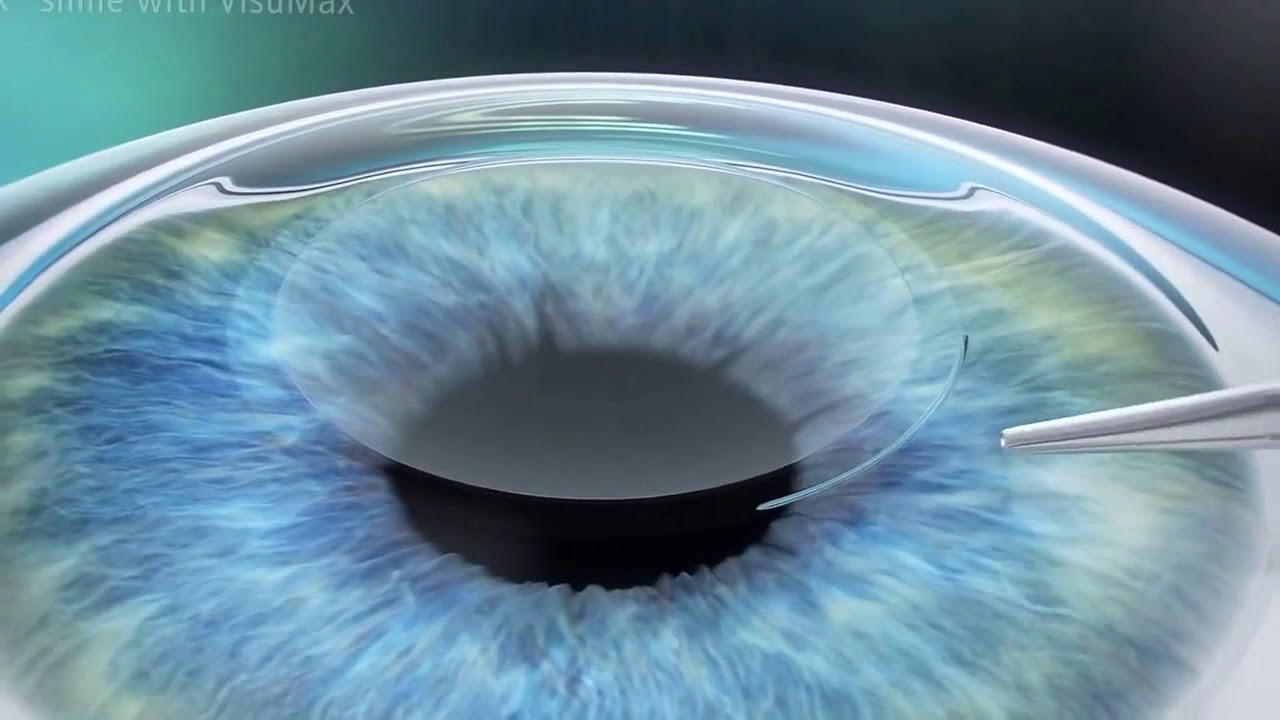
The surgeon removes this lenticule through a very small incision.
Removing it changes the corneal shape in a controlled way and adjusts the eye’s refractive power, allowing light to focus more accurately on the retina.
SMILE Pro is therefore both flapless and bladeless.
What makes SMILE Pro an advanced procedure?
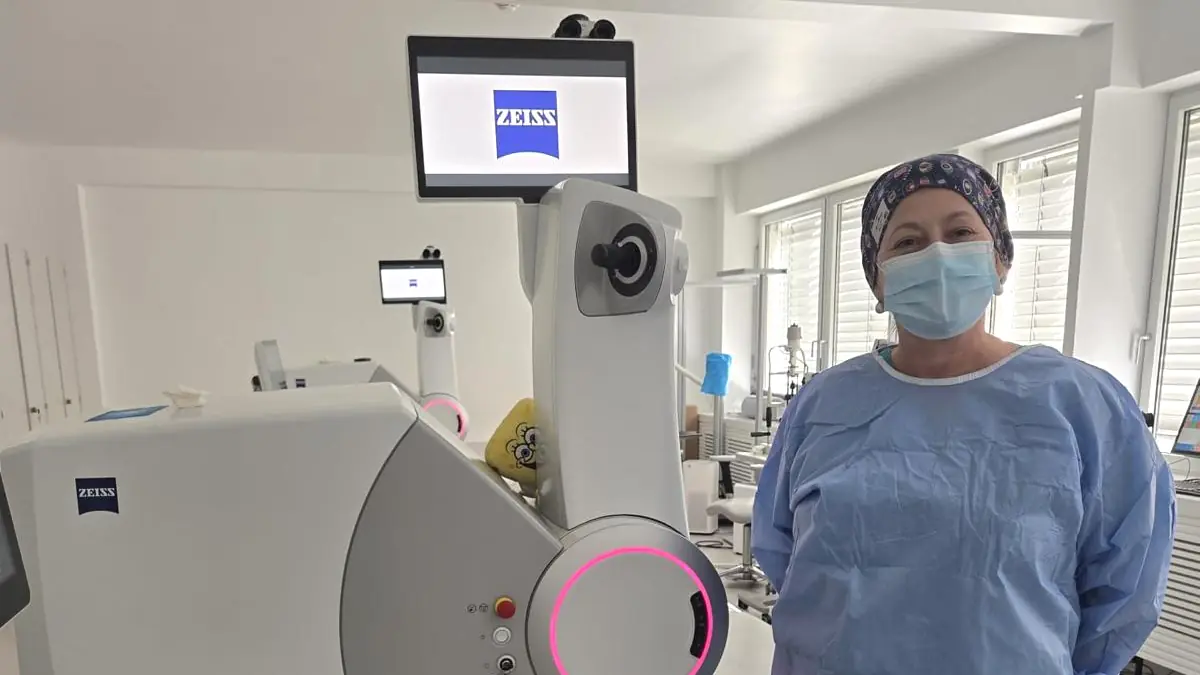
SMILE Pro is performed with the ZEISS VISUMAX 800, an advanced femtosecond-laser platform developed for refractive surgery.
Its current technology supports a fast and highly controlled treatment workflow.
For the treatment of myopia, ZEISS states that the laser step itself takes less than ten seconds.
Digital assistance features such as CentraLign and OcuLign also help the surgeon centre and align the treatment accurately.
The procedure brings together several contemporary elements:
femtosecond-laser technology
no corneal flap
a very small access incision
precise lenticule creation
digital centration and alignment support
a very short laser step
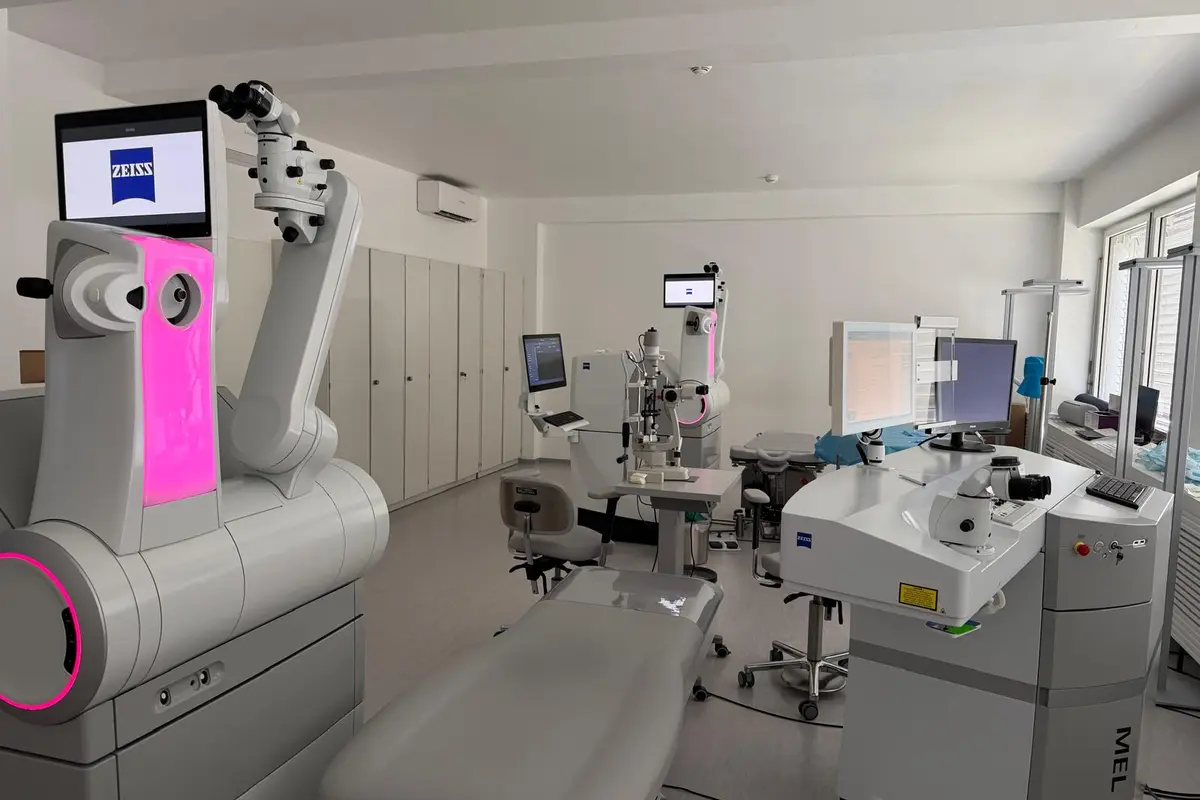
The ZEISS VISUMAX 800 and MEL 90 in the LASIKWELT laser suite in Cologne.
SMILE Pro: CE marking and FDA approval
Approved indications for SMILE are not identical in every country. They depend on the applicable regulatory framework, software version and authorised treatment parameters.
Within Europe, SMILE Pro is available under its relevant CE-marked intended purpose for myopia and astigmatism and, in selected European markets, for hyperopia. The treatment range that can be considered for an individual patient still depends on the approved configuration and the clinical findings. ZEISS provides further information about SMILE Pro for hyperopia.
In the United States, the FDA approval for SMILE covers myopia and myopia combined with astigmatism. US indications should therefore not be assumed to match European indications.
CE marking, FDA approval and recommendations from professional bodies are separate matters. In their May 2024 recommendations, the German DOG and BVA Commission for Refractive Surgery listed laser lenticule extraction for myopia and astigmatism. Newer indications must be assessed using current product information, available scientific evidence and the individual examination findings.
Regulatory availability alone does not establish whether a procedure is appropriate for a particular eye. The type of refractive error, corneal characteristics and the results of a thorough diagnostic examination remain decisive.
SMILE Pro or FemtoLASIK?
Both SMILE Pro and FemtoLASIK are modern refractive procedures, but they reach and reshape the cornea in different ways.
With FemtoLASIK, the surgeon first creates a thin corneal flap. An excimer laser then reshapes the underlying tissue.
SMILE Pro does not require a conventional flap.
Instead, a lenticule is formed within the cornea and removed through a small opening.
The way the surgeon accesses the cornea is one of the central differences between SMILE Pro and LASIK.
In LASIK, a thin flap is created and lifted during treatment.
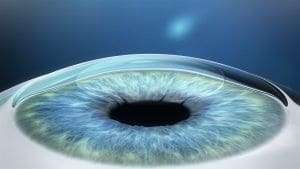
With SMILE Pro, the outer corneal structure remains largely intact and the lenticule is reached through a small incision.
This is why SMILE Pro is described as a flapless, minimally invasive procedure.
Because fewer corneal nerves are transected than with LASIK, the technique may also be relevant when the ocular surface is an important consideration.
A systematic review and network meta-analysis reported less early disruption and faster recovery of sub-basal corneal nerves after SMILE than after FS-LASIK. At six months, however, the assessed nerve density and number no longer differed significantly.
This does not mean that dry-eye symptoms cannot occur after SMILE Pro. Careful ocular-surface assessment remains essential.
SMILE Pro with the ZEISS VISUMAX 800
Successful laser vision correction depends on more than the name of the procedure.
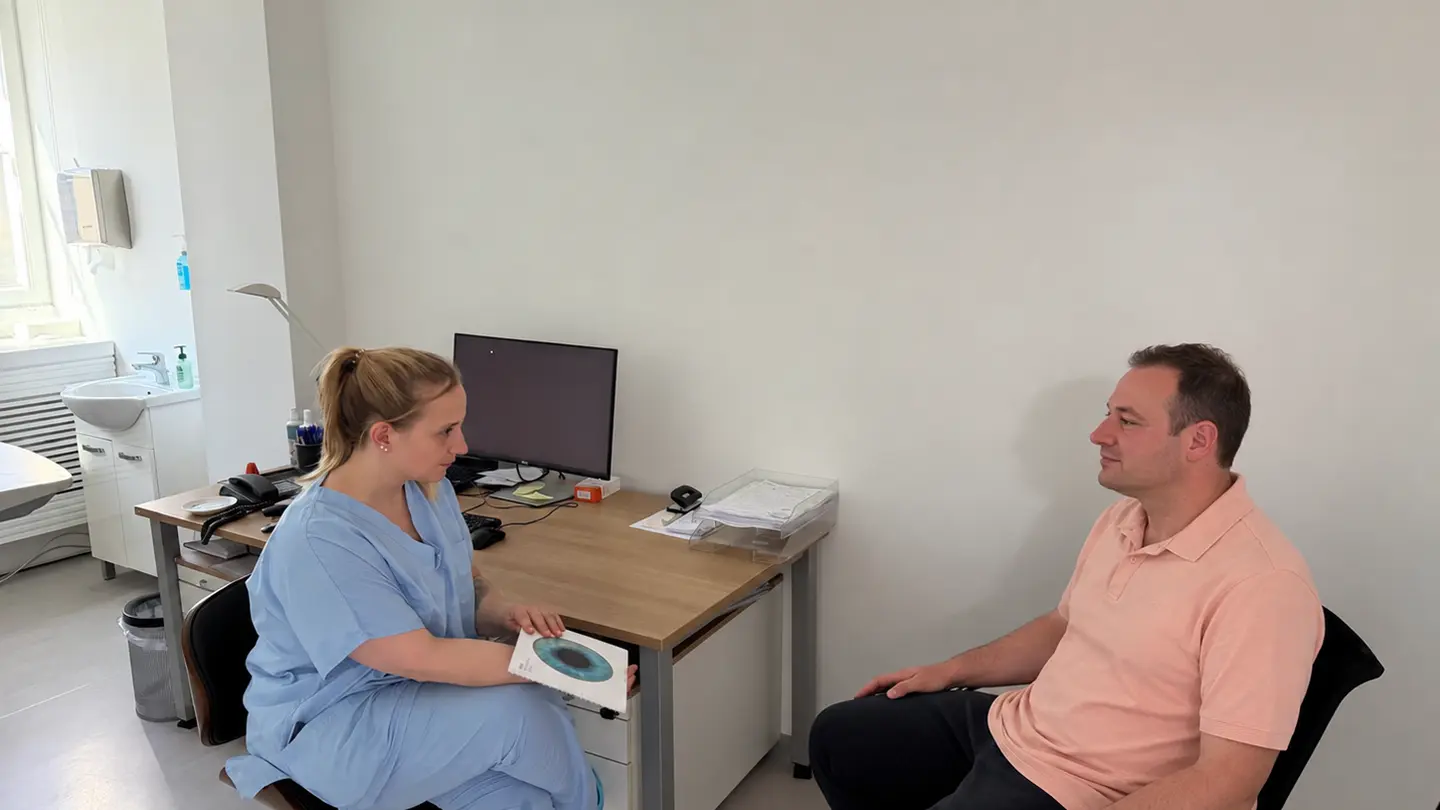
Every treatment begins with a detailed examination of your eyes.
This may include assessment of:
visual acuity
your current prescription
corneal thickness
corneal topography
corneal tomography
the ocular surface
the tear film
other clinically relevant eye parameters
The central question is:
Is SMILE Pro medically suitable for your eyes?
2. Personalised treatment planning
Your examination data form the basis of an individual treatment plan.
The plan takes both your eye measurements and your personal visual requirements into account.
3. The SMILE Pro procedure
SMILE Pro is carried out as an outpatient procedure.
Anaesthetic eye drops are used to prepare the eye.
The VISUMAX 800 then creates the individually calculated lenticule within the cornea.
The surgeon gently removes the lenticule through the small access incision.
The laser step itself lasts only a few seconds.
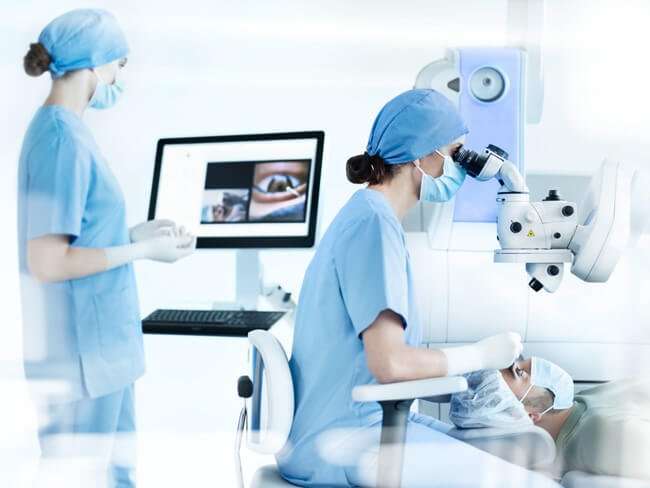
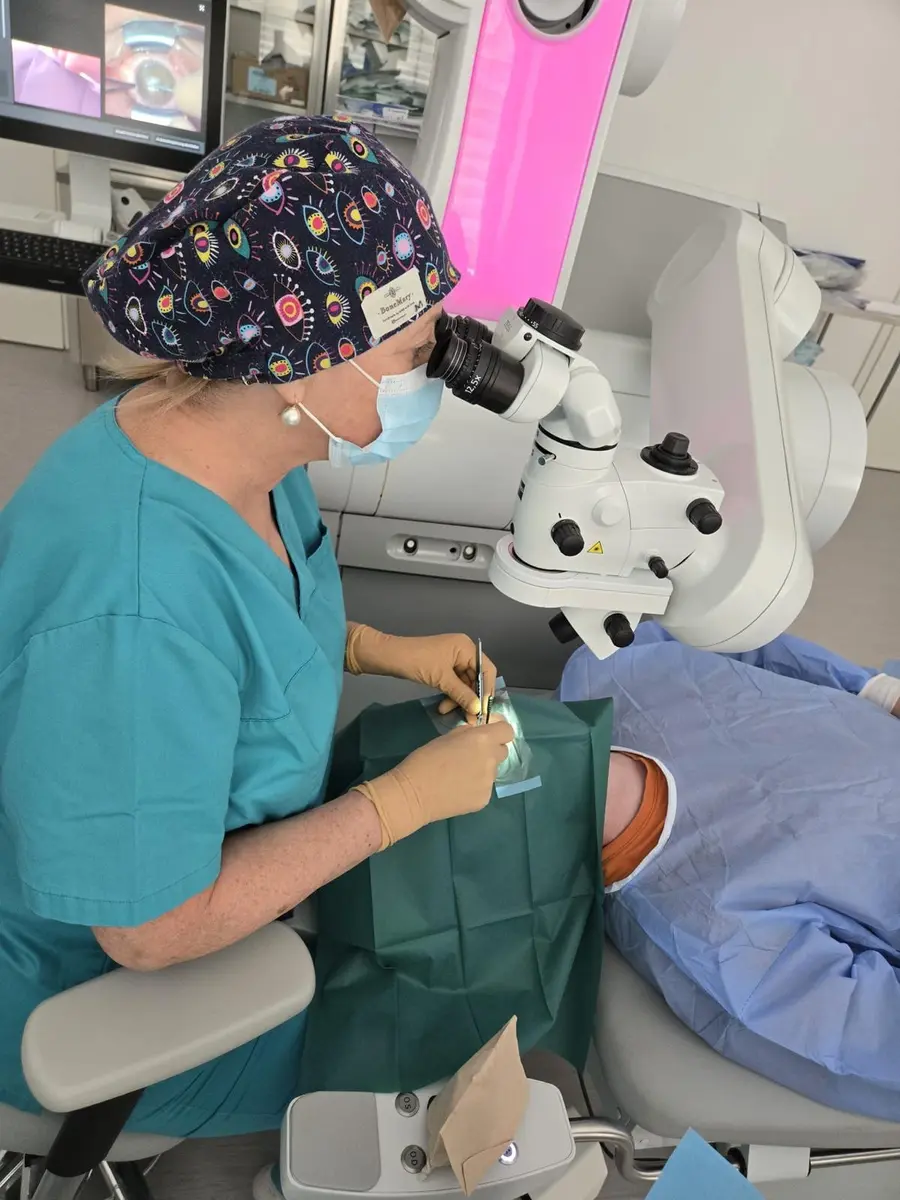
SMILE Pro at LASIKWELT: small-incision lenticule extraction with the ZEISS VISUMAX 800.
The treatment steps
Within the intact cornea, the femtosecond laser creates a precisely calculated lenticule and a small access incision in a single step.
The prepared lenticule is carefully separated from the surrounding tissue and removed through the small incision.
Removing the lenticule changes the corneal shape in a controlled way, correcting refractive power and improving focus.
4. After the procedure
Vision may improve noticeably soon after treatment.
Some fluctuation is normal during the first hours and days.
The time required for vision to stabilise varies from person to person.
Your ophthalmologist will advise when it is safe for you to drive, return to work, exercise or resume other activities.
Safety, side effects and possible risks
SMILE is an established refractive procedure that has been performed on millions of eyes worldwide.
SMILE Pro combines the established principle of lenticule extraction with the newer VISUMAX 800 platform.
A seven-year study published in 2024 compared long-term refractive outcomes after SMILE and FemtoLASIK for myopia and myopic astigmatism. Long-term evidence is important when discussing safety and stability, but it does not show that one method is automatically superior for every eye. Read the scientific publication
At LASIKWELT, we deliberately avoid blanket claims such as “100% safe” or “risk-free”.
The safety of laser eye surgery depends on several factors:
careful patient selection
comprehensive diagnostics
appropriate treatment planning
modern technology
the surgeon’s experience
consistent follow-up care
Even the most advanced technology is only the right choice when it suits the individual eye.
Possible side effects and complications
Like any surgical procedure, SMILE Pro can involve side effects and risks.
Temporary symptoms may include:
fluctuating vision
sensitivity to light
halos or other night-vision phenomena
a foreign-body sensation
dry or irritated eyes
These symptoms are often temporary, although healing varies between patients.
Rare complications may include irregular dissection planes, incomplete lenticule removal, sterile inflammatory reactions or infection. Your individual risk profile is discussed during the examination and consent consultation. Risk assessment is informed, among other sources, by the recommendations of the German Commission for Refractive Surgery.
Rapid visual rehabilitation is one of the advantages associated with modern SMILE treatment.
Many patients notice a clear improvement soon after the procedure.
Vision may nevertheless continue to fluctuate and settle over the following days and weeks.
For this reason, your ophthalmologist’s advice regarding driving, work and sport should always be followed.
Who may be suitable for SMILE Pro?
SMILE Pro may be an option for many patients with myopia, astigmatism or hyperopia, provided that the cornea and the rest of the eye meet the medical requirements.
Suitability depends on factors such as:
the type and degree of refractive error
stability of the prescription
corneal thickness
corneal shape
ocular-surface health
tear-film quality
overall eye health
personal expectations and visual priorities
A prescription value by itself is therefore not enough to determine suitability.
The health and stability of the ocular surface are assessed carefully before laser eye surgery. Existing dryness or irritation should first be recognised and, where necessary, treated before a refractive procedure is considered.
Unlike FemtoLASIK, SMILE Pro does not involve creating a conventional corneal flap. It also transects fewer corneal nerves than LASIK. Preserving more of the corneal nerve network may be beneficial for tear-film stability and ocular-surface sensitivity in suitable patients.
A systematic review and meta-analysis found significant reductions in tear production and tear-film stability after LASIK, whereas the corresponding changes after SMILE were not statistically significant. The authors also stressed the need for further high-quality randomised studies. This suggests that SMILE may offer ocular-surface advantages for selected patients, particularly during the first weeks and months.
SMILE Pro does not eliminate the possibility of dry-eye symptoms. Temporary dryness, irritation or fluctuating vision can still occur. Individual risk depends on the condition of the ocular surface and cornea, tear production and other personal factors.
For that reason, detailed ocular-surface assessment is an important part of determining suitability. It helps the ophthalmologist estimate individual risk and select the most appropriate treatment method.
SMILE Pro cost in Cologne
€2,000 per eye
At LASIKWELT, SMILE Pro currently costs €2,000 per eye. This price covers the procedure and the scheduled postoperative check-ups included in the treatment pathway.
A comprehensive examination takes place beforehand to establish whether SMILE Pro is appropriate for the individual eye and refractive error. Not every cornea or prescription is suitable for the same procedure.
Our SMILE Pro concept also includes an enhancement guarantee of up to 10 years. If a clinically relevant residual refractive error develops and further correction is medically possible and appropriate, an enhancement may be performed under the terms of the guarantee.
Our aim is not only to provide precise vision correction but also to support patients after treatment. Scheduled follow-up examinations and careful assessment of how the eyes develop are therefore part of our approach.
The available treatment options are discussed individually after the full examination. Alternatives such as FemtoLASIK are also considered if they are medically more suitable in a particular case.
SMILE Pro and FemtoLASIK are established procedures with different surgical approaches. The flapless access and lower early impact on corneal nerves may favour SMILE Pro in some situations. FemtoLASIK also enables precise correction and may be the better choice for certain starting conditions.
A meta-analysis of randomised trials found broadly comparable safety and effectiveness for SMILE and LASIK in myopia and myopic astigmatism, with differences in some individual outcomes. These findings do not support a universal claim that one method is better for every patient. View the scientific analysis on PubMed
The final recommendation should be based on comprehensive diagnostics, corneal measurements, the refractive error and the patient’s visual priorities. Our page SMILE Pro or LASIK? provides a more detailed comparison.
SMILE Pro or ReLEx SMILE?
SMILE and SMILE Pro are based on the same principle of lenticule extraction.
SMILE Pro represents the current generation of the technology on the ZEISS VISUMAX 800 platform.
The newer laser generation enables a particularly fast workflow and adds digital assistance functions.
It is therefore useful to ask more than whether a clinic offers “SMILE”.
Another relevant question is:
Which generation of laser will be used for the procedure?
LASIKWELT performs SMILE Pro with the ZEISS VISUMAX 800.
Why choose LASIKWELT for SMILE Pro?
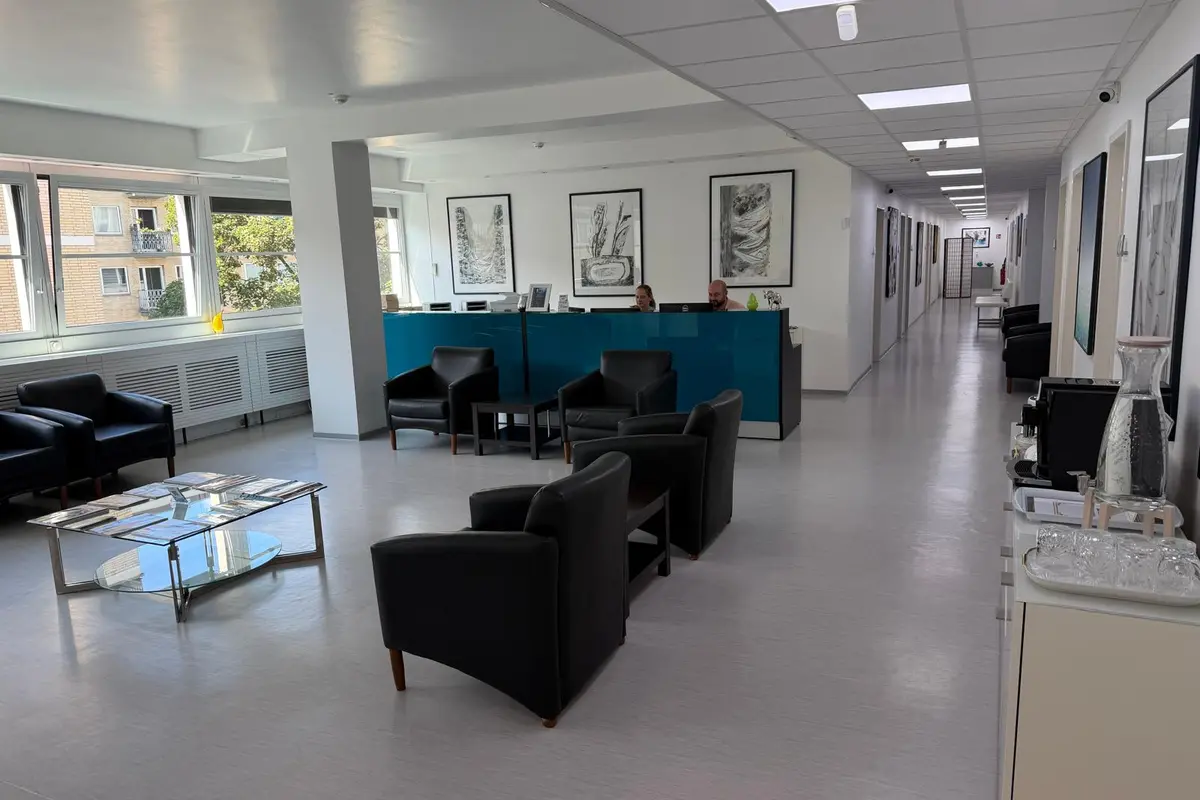
LASIKWELT laser eye clinic at Herzogstraße 32 in Cologne.
Advanced technology
We perform SMILE Pro with the modern ZEISS VISUMAX 800.
Individual planning
Every eye is different, so comprehensive diagnostics come before any treatment recommendation.
Clinical experience
LASIKWELT has many years of experience in refractive surgery.
Transparent costs
Treatment prices and the included services are explained clearly.
Follow-up care
Scheduled postoperative checks are an integral part of treatment. We also offer an enhancement guarantee of up to 10 years, provided that further correction is medically possible.
Ophthalmic care
An ophthalmologist supports you from detailed diagnostics and personal counselling through to the scheduled follow-up visits.
Is SMILE Pro the most advanced form of laser eye surgery?
SMILE Pro belongs to the latest generation of refractive laser procedures.
Its combination of small-incision lenticule extraction and the ZEISS VISUMAX 800 offers an advanced form of laser vision correction. The refractive error can be treated precisely without creating the conventional corneal flap used in LASIK.
The small access incision is another characteristic of the technique. It allows the surgeon to correct the refractive error while preserving much of the anterior corneal structure.
However, “most advanced” does not mean “best for every eye”. Depending on the initial findings, FemtoLASIK or another refractive procedure may be more appropriate.
Every recommendation at LASIKWELT therefore starts with a comprehensive examination. Corneal shape and thickness, pupil characteristics, tear-film quality and the exact type and degree of refractive error are all assessed.
These findings allow us to decide which procedure is medically best suited to your eyes. The objective is not to use one method for everyone, but to select the treatment that matches your anatomy and visual requirements.
6 clinically relevant features of SMILE Pro
Flapless access
The lenticule is removed through a small incision without creating a conventional corneal flap.
Short laser step
For myopia, the manufacturer states that the laser step with the ZEISS VISUMAX 800 takes less than ten seconds.
Digital assistance systems
CentraLign and OcuLign assist the surgeon with treatment centration and alignment.
Rapid visual rehabilitation
Many patients can return to everyday activities relatively quickly. The precise timing depends on individual healing and the activity concerned.
Current laser platform
SMILE Pro is performed with the ZEISS VISUMAX 800, the current platform generation for the procedure.
Individual suitability assessment
Corneal shape and thickness, refractive error, ocular-surface health and personal visual needs are evaluated before treatment.
Frequently asked questions about SMILE Pro
Is SMILE Pro painful?
The eye is numbed with anaesthetic drops. Pain would not normally be expected during the laser procedure itself. Temporary irritation or a foreign-body sensation may occur afterwards.
How long does SMILE Pro take?
The complete procedure takes only a few minutes. For myopia, ZEISS states that the laser step itself lasts less than ten seconds.
When can I return to work?
Many patients can resume normal daily activities quickly. The right time to return depends on the individual healing process and the nature of the work.
Can SMILE Pro correct astigmatism?
Yes. In suitable patients, SMILE Pro can correct myopia combined with astigmatism.
Is SMILE Pro FDA approved and CE marked?
In the United States, SMILE is FDA approved for myopia and myopia with astigmatism. In Europe, SMILE Pro is CE marked for the applicable intended indications. FDA approval and CE marking are different regulatory frameworks and should not be treated as equivalent.
Is SMILE Pro approved for hyperopia?
SMILE is not currently FDA approved for hyperopia. According to ZEISS, SMILE Pro is available for hyperopia in selected European markets under the relevant CE-marked intended purpose. An ophthalmologist must still confirm individual suitability and the treatment range that can be considered.
Is SMILE Pro better than LASIK?
Not in every case. For suitable patients, SMILE Pro may offer advantages through its flapless access and lower early impact on corneal nerves. FemtoLASIK is also an established and precise procedure. The better option depends on the eye findings, the cornea, the refractive error and the patient’s visual needs.
Scientific comparisons indicate broadly similar safety and effectiveness for SMILE and LASIK, without proving that either procedure is superior for all patients. Read the meta-analysis of randomised trials
Might an enhancement be necessary?
As with other refractive procedures, an enhancement may occasionally be appropriate or necessary. This depends on the individual clinical findings.
Does LASIKWELT offer a guarantee?
Under its current terms, LASIKWELT provides an enhancement guarantee of up to 10 years for SMILE Pro, provided that the medical requirements for further correction are met.

 Deutsch