
 Deutsch
Refractive errors – Symptoms, Causes and Treatment
Refractive errors occur when the eye’s shape prevents light from focusing correctly on the retina, leading to blurry vision and other symptoms.
Free info kit
Free quick check
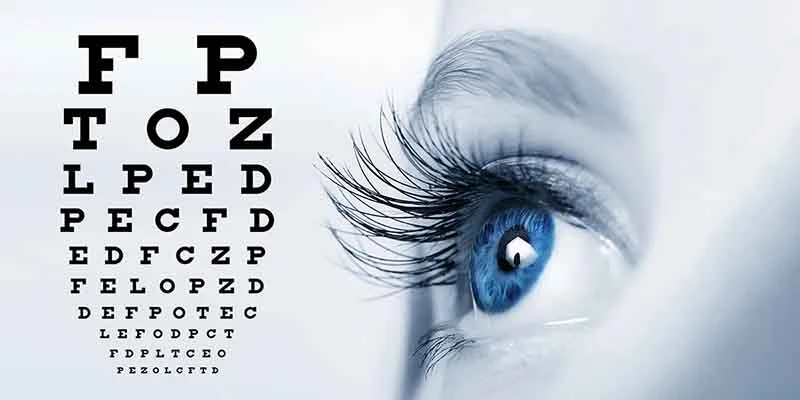

Refractive errors occur when the eye’s shape prevents light from focusing correctly on the retina, leading to blurry vision and other symptoms.
Free info kit
Refractive errors are deviations from normal vision that can affect the quality of life of those affected. They include a variety of conditions such as myopia (nearsightedness), hyperopia (farsightedness), astigmatism, and presbyopia. Each of these conditions has specific causes and treatment options that can range from glasses and contact lenses to surgical interventions.
Myopia, also known as nearsightedness, is characterized by good near vision, while distant objects appear blurry. Hyperopia, or farsightedness, is the opposite, with nearby objects appearing blurry. Astigmatism is a distortion of vision caused by an irregular shape of the cornea. Presbyopia is an age-related condition that typically occurs after the age of 40 and affects the ability to see objects up close clearly.
Early detection and treatment of refractive errors are vital to prevent worsening vision and maintain a good quality of life.
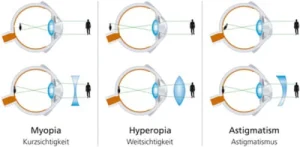 Refractive errors , also known as refractive errors, are anomalies of the eye that impair the ability to correctly refract light, leading to blurred perception. Common refractive errors consist of myopia, hyperopia, astigmatism, and presbyopia. Myopia occurs when images are focused in front of the retina, causing distant objects to appear blurry. Hyperopia, on the other hand, results in focusing behind the retina, affecting near vision. Astigmatism is characterized by an irregular curvature of the cornea or lens, causing distorted images. Presbyopia is an age-related condition where the lens loses flexibility, reducing the ability to focus on near objects. Corrective measures for Refractive errors can include glasses, contact lenses, or surgical procedures.
The severity of refractive errors is measured in diopters, which quantify the optical system’s ability to bend light. Eyeglasses that correct myopia are expressed as a negative (-) number, while those that correct hyperopia are expressed as a positive (+) number. The more myopic, hyperopic, or astigmatic you are, the higher your diopter value.
Your eyeglass prescription consists of three numbers:
For example, -3.00 -2.50 × 180 is a typical prescription to correct a vision problem.
First number: -3.00 indicates the degree of your myopia or hyperopia. The sign indicates whether you are nearsighted (- sign) or farsighted (+ sign).
Second number: A second number, such as -2.50, represents the degree of astigmatism. The number can be written with either a + or – sign.
Third number: 180 identifies the axis that specifies the direction of your astigmatism. An axis of 180 degrees, for example, means that the astigmatism is horizontal.
For example, a prescription of -3.00 -2.50 × 180 means the patient is moderately nearsighted with moderate horizontal astigmatism.
Refractive errors can arise from multiple factors. Common factors include genetic predisposition, age-related changes, and environmental influences. Refractive errors such as myopia, hyperopia, and astigmatism arise from irregularities in the shape of the cornea or lens, leading to blurred vision. Cataracts, which are clouding of the lens, are often age-related, while glaucoma, also known as green star, is caused by increased intraocular pressure that can damage the optic nerve. Other factors such as diabetes, medications, and eye injuries can also cause Refractive errors . Preventive care and regular eye exams are key to identifying and treating visual disorders early
Refractive errors , also known as refractive errors, affect the eye’s ability to correctly refract light, leading to blurred vision.
There are various types of Refractive errors :
Refractive errors can be corrected using glasses, contact lenses, refractive surgery, or specialized visual therapies based on the type and severity of the condition and the patient’s needs.
The symptoms of Refractive errors can vary depending on the type of error, but there are general signs that indicate a need for vision testing:
If any of these symptoms occur, it is advisable to consider an eye examination. An ophthalmologist can provide an accurate diagnosis and recommend appropriate corrective measures.

Vision Test: A basic vision test is conducted to determine visual acuity. This involves checking how well someone can recognize letters or symbols of various sizes from a specific distance.
Refraction Test: Using various lenses, it is determined what correction is needed to optimize visual acuity. This helps identify myopia, hyperopia, or astigmatism.
Eye Health Examination: Using special instruments, the ophthalmologist can examine the front and back parts of the eye to exclude or identify other eye diseases.
Other Specialized Tests: Depending on the symptoms, further tests such as visual field testing, intraocular pressure measurement, or specialized eye imaging may be required.
Treatments vary depending on the type and severity of the visual impairment.
The most widely used correction methods for refractive errors are glasses and contact lenses, with lenses chosen based on the specific impairment.
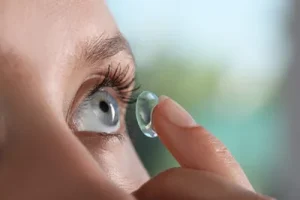 An alternative to glasses that provide direct contact with the eye and offer a more natural visual experience. They come in various types, including soft and hard lenses.
Options such as LASIK, PRK, LASEK, or SMILE can be used to permanently alter the shape of the cornea and correct Refractive errors . These methods are particularly popular for myopia, hyperopia, and astigmatism.
For individuals who do not wish to undergo refractive surgery or are not suitable candidates for it, ICLs can be an option. These corrective lenses are placed inside the eye to treat refractive errors.
In certain cases, lifestyle adjustments, such as using magnifying aids or better lighting, may be enough to improve vision.
The treatment approach depends on factors like the type and severity of impairment, the patient’s age, overall health, and personal preferences. Regular vision checks are essential to detect and treat Refractive errors early.
Laser eye surgeries are effective for correcting many refractive errors. Here are the most common Refractive errors that can be treated with laser technology:

Laser eye treatments offer a modern way to correct Refractive errors such as myopia, hyperopia, astigmatism, and presbyopia, reducing dependency on glasses or contact lenses. There are various procedures like PRK, LASIK, Femto-LASIK, ReLEx SMILE, and SMILE Pro, which differ in their application, benefits, and risks.
One of the newest procedures, ReLEx SMILE, is particularly gentle and recommended for its high precision and the ability to be used even for dry eyes. However, this procedure is more expensive than others, costing between 2,500 and 3,500 euros per eye, compared to about 1,000 to 2,500 euros for LASIK and Femto-LASIK. The costs of laser eye treatments vary depending on the location, doctor, and additional services. In Germany, the costs for laser eye treatments generally range between 800 and 2,600 euros per eye.
Before the operation, certain preparations must be made, such as temporarily stopping the use of contact lenses and applying special eye drops. The operation itself takes only a few minutes per eye, and most patients can return to work and resume their daily activities within a few days.
There are many benefits to laser eye treatment, such as improved visual acuity, contrast vision, and color perception, but also potential risks like infections, dry eyes, or in rare cases, a deterioration of vision. It’s important to thoroughly research and select a reputable clinic and surgeon.
Health insurance typically does not cover these procedures as they are considered elective, but some private insurance plans may offer full or partial coverage.
A thorough pre-examination and consultation by an ophthalmologist or eye surgeon is crucial to determine the best method for the individual situation.
There are risks and side effects, including dry eyes, light sensitivity, and possible follow-up corrections.
Not every visual impairment and not every person is suitable for laser eye treatment.
The choice of the right method depends on various factors, including the type and degree of visual impairment, the thickness and shape of the cornea, the patient’s age, and individual needs and circumstances.
 Preventing refractive errors is a vital aspect of maintaining eye health.
Routine eye exams are essential for the early detection and management of vision issues.
These exams help identify issues before they become more severe, allowing for timely intervention. Additionally, maintaining a balanced diet rich in vitamins and minerals, such as vitamins A, C, and E, along with omega-3 fatty acids, is beneficial for eye health. These nutrients support eye functions and help guard against degenerative diseases.
Wearing sunglasses can protect the eyes from harmful ultraviolet (UV) rays, which can cause cataracts and other eye conditions. It’s important to choose sunglasses that block 100% of UV rays for optimal protection. Regular breaks during computer work are also essential to relieve eye strain and minimize the risk of developing screen-related vision problems, such as digital eye strain. The 20-20-20 rule, which involves taking a 20-second break every 20 minutes to look at something 20 feet (6 meter) away, can be helpful in reducing eye fatigue.
Properly fitted visual aids like glasses or contact lenses can correct refractive errors, improving quality of life. Ensuring that these aids are updated regularly based on changes in vision is important for maintaining optimal vision. Participating in sports and exercises that strengthen eye muscles can help prevent refractive errors. Activities such as focusing on distant objects during outdoor activities or performing specific eye exercises can enhance the flexibility and strength of the eye muscles.
Lastly, avoiding smoking is critical as it raises the risk of eye diseases such as cataracts and age-related macular degeneration. Smoking cessation can significantly reduce these risks and promote overall eye health. By incorporating these preventive measures into daily routines, individuals can better protect their vision and maintain healthy eyes throughout their lives.

At Lasikwelt Eye Laser Center, we offer various highly effective laser eye methods that serve as solutions for different vision problems. With our advanced technologies, you can expect an improvement in your visual acuity at prices that are easy on your wallet. We also offer flexible financing models so that the costs of your treatment can be handled easily and without financial strain. Our goal is to make high-quality eye medicine accessible to all patients.


