
 Deutsch

What is Dry Eye?
 Dry Eye Syndrome is a prevalent condition that arises when your eyes are not sufficiently lubricated. Various factors can cause tears to be inadequate or unstable. For example, dry eyes can occur if you do not produce enough tears or if the tears you produce are of poor quality. This instability in tear production leads to inflammation and damage to the surface of the eye.
Dry eyes feel uncomfortable. You might experience sensations such as stinging or burning in your eyes. Dry eyes can occur in specific situations, such as on an airplane, in an air-conditioned room, while cycling, or after staring at a computer screen for several hours.
Treatments for dry eyes can provide you with more comfort. Managing this condition often involves making lifestyle adjustments and using eye drops. These measures may need to be continued indefinitely to alleviate dry eye symptoms.
How do tears work?

When you blink, a film of tears spreads across the eye. This keeps the surface of the eye smooth and clear. The tear film is essential for good vision.
The tear film consists of three layers:
- An oily layer
- A watery layer
- A mucous layer
Each layer of the tear film plays a specific role.
The oily layer is the outermost layer of the tear film. It smooths the tear surface and prevents tears from evaporating too quickly. This layer is produced in the Meibomian glands of the eye.
The watery layer is the middle layer of the tear film. This layer constitutes most of what is visible as tears. This layer cleanses the eye by washing away particles that do not belong in the eye. This layer originates from the lacrimal glands in the eyelids.
The mucous layer is the deepest layer of the tear film. It helps spread the watery layer over the surface of the eye and keeps it moist. Without mucus, the tears would not adhere to the eye. Mucus is produced in the conjunctiva, the clear tissue that covers the white of your eye and the inside of your eyelids.
Normally, our eyes constantly produce tears to keep them moist. When our eyes are irritated or when we cry, our eyes produce a lot of tears. However, sometimes the eyes do not produce enough tears, or something affects one or more layers of the tear film. In these cases, we experience dry eyes.
Causes of Dry Eyes
The causes of dry eyes are varied and can range from environmental factors to health conditions. Some of the most common causes include:
 Aging: As you age, your tear glands produce fewer tears, which can lead to dry eyes.
Environmental factors: Wind, dry air, and smoke can accelerate the evaporation of tears.
Screen time: Long periods of staring at computer screens or phones can reduce the frequency of blinking, which in turn affects eye lubrication.
Medications: Certain medications, such as antihistamines, some blood pressure medications, and antidepressants, can cause dry eyes as a side effect.
Some medications that can cause Dry Eye Syndrome include:
- Diuretics (water pills) for high blood pressure
- Beta-blockers for heart problems or high blood pressure
- Allergy and cold medications (antihistamines)
- Sleeping pills
- Medications for anxiety and depression
- Medications for heartburn
Medical conditions:
- Certain diseases, such as rheumatoid arthritis, Sjogren’s syndrome, thyroid disorders, and lupus
- Blepharitis (when the eyelids are swollen or red)
- Entropion (when the eyelids turn inward); ectropion (when the eyelids turn outward)
Environmental factors: Being in smoke, wind, or a very dry climate
Contact lenses: Wearing contact lenses for long periods.
LASIK surgery: Refractive eye surgeries, such as LASIK.
For current evidence on how SMILE Pro, FemtoLASIK and PRK affect the tear film and corneal sensitivity, read our guide to dry eyes after laser eye surgery.
Symptoms of Dry Eyes
The symptoms of dry eyes can range from mild to severe and include:

- A burning or scratching sensation in the eyes.
- A feeling as if something is in your eye.
- Eye fatigue, especially when reading or working on a screen.
- Sensitivity to light.
- Blurred vision, especially at the end of the day.
- Mucus threads in or around your eyes.
- Your eyes are red or irritated, especially in windy conditions or near cigarette smoke.
- Painful to wear contact lenses.
- Excessive tearing.
How is Dry Eye Diagnosed?
To diagnose the cause of your dry eyes, various tests and procedures may be conducted:
- A comprehensive eye examination. An eye examination that includes a complete history of your general health and eye health can help your eye doctor diagnose the cause of your dry eyes.
- A test to measure tear volume. Your eye doctor can measure your tear production with the Schirmer test. One such test involves placing blotting paper strips under your lower eyelids. After five minutes, your eye doctor measures how much of the strip has been moistened by your tears.
- Another test assesses the quality of your tears. Other tests use special dyes in eye drops to determine the condition of the surface of your eyes. Your eye doctor might also examine staining patterns on your corneas and measure the time it takes for your tears to evaporate.
Treatment Options for Dry Eyes
For most people with occasional or mild dry eye symptoms, it is sufficient to regularly use over-the-counter eye drops, also known as artificial tears. If your symptoms are persistent and more severe, you have other options. What you need to do will depend on the underlying cause of your dry eyes.
Treatment of the underlying cause of dry eyes
In some cases, treating an underlying health issue can help eliminate the signs and symptoms of dry eyes. For instance, if a specific medication is responsible for your dry eyes, your eye doctor might suggest an alternative medication that doesn’t have this side effect.
If you have an eyelid condition, such as outward-turned lids (ectropion), your eye doctor may refer you to an oculoplastic surgeon who specializes in plastic surgery of the eyelids.
Medications to Treat Dry Eyes
Prescription medications used to treat dry eyes include:
- Medications to reduce eyelid inflammation: Inflammation at the edge of your eyelids can prevent oil glands from secreting oil into your tears. Your eye doctor may recommend antibiotics to reduce the inflammation. Antibiotics for dry eyes are usually taken orally, although some are used as eye drops or ointments.
- Eye drops to control corneal inflammation: Inflammation on the surface of your eyes (cornea) can be controlled with prescription eye drops containing the immunosuppressive drug cyclosporine (Restasis) or corticosteroids. Corticosteroids are not ideal for long-term use due to potential side effects.
- Eye inserts that act like artificial tears: If you have moderate to severe symptoms of dry eyes and artificial tears do not help, another option may be a tiny eye insert resembling a clear grain of rice. Once a day, you place the hydroxypropyl cellulose (Lacrisert) insert between your lower eyelid and your eye. This insert gradually dissolves, releasing a substance similar to that found in eye drops to help lubricate your eyes.
- Tear-stimulating medications: Medications known as cholinergics (pilocarpine, cevimeline) help increase tear production. These treatments can be administered as pills, gels, or eye drops. Possible side effects include sweating.
- Eye drops made from your own blood: These are known as autologous blood serum drops. They may be an option if you have severe symptoms of dry eyes that do not respond to any other treatment. To make these eye drops, a sample of your blood is processed to remove the red blood cells and then mixed with a saline solution.
- A nasal spray to increase tear production: The Food and Drug Administration (FDA) recently approved varenicline (Tyrvaya) for the treatment of dry eyes. This medication is administered via a nasal spray. Varenicline is sprayed once into each nostril, twice a day.
Extremely Dry Eyes: What Helps
Other procedures used to treat dry eyes may include:
Closing your tear ducts to reduce tear loss
 Your eye doctor may suggest this treatment to prevent your tears from draining too quickly from your eye. This can be achieved by partially or completely closing your tear ducts, which normally serve to drain tears.
Tear ducts can be closed with small silicone plugs (punctal plugs). These are removable. Alternatively, tear ducts can be closed with a heat-based procedure. This is a more permanent solution known as thermal cauterization.
Using special contact lenses
Ask your eye doctor about newer contact lenses specifically designed to help people with dry eyes.
Some people with severe dry eyes choose special contact lenses that protect the surface of the eyes and retain moisture. These are known as scleral lenses or bandage lenses.
Releasing blocked oil glands
Warm compresses or eye masks used daily can help clear blocked oil glands. A thermal pulsation device is another option to unblock the oil glands, but it is unclear if this method offers any advantage over warm compresses.
Using light therapy and eyelid massage
A technique known as intense pulsed light therapy followed by eyelid massage can help people with severe dry eyes.
Preventing and Relieving Dry Eyes
If your eyes are irritated, your eye doctor can treat these problems. They may recommend:
- Prescription eye drops or ointments
- Warm compresses on the eyes
- Massaging your eyelids
- Specific eyelid cleaners
- Lifestyle changes: If something in your life or environment is causing or worsening your dry eyes, your doctor may suggest changes to protect your eyes. For example, if a medication you are taking for another health condition is causing dry eyes, your doctor may also suggest trying a different medication.
Your eyes may also feel better if you:

- Avoid smoke, wind, and air conditioning.
- To prevent the air in your home from becoming too dry, consider using a humidifier.
- Reduce screen time and take frequent breaks from looking at screens
- Wear wraparound sunglasses when you are outside.
- Drink plenty of water — try to drink 8 to 10 glasses each day.
- Get enough sleep — about 7 to 8 hours per night.
Dry eyes are a widespread problem, but in most cases, they can be successfully treated. If you regularly suffer from dry eyes, it is advisable to see an eye doctor for a proper diagnosis and treatment. With the right care and appropriate treatments, most people can significantly reduce or even eliminate the discomfort of dry eyes.
7 Tips to Treat Dry Eyes at Home
Do you suffer from dry eyes? There is hope, and the possibility of relieving your discomfort exists regardless of how long you have been struggling with it. If your eyes are not extremely dry, the following home remedies may be helpful. Discover how to effectively treat dry eyes!

- Invest in a Humidifier: If you live in a dry environment, a humidifier can work wonders. Increasing the humidity in your home can prevent your eyes from drying out too quickly and provide the necessary support for their health.
- Wipe Dust Regularly: Remove dust and dirt from your home to avoid particles entering your eyes. Use a damp cloth instead of a dry duster to make the dust stick better.
- Keep Windows Closed: Open windows allow allergens to enter, which can irritate your eyes. If possible, use an air conditioner for cooling and combine it with a humidifier to counteract the drying out of the rooms.
- Stay Hydrated: Drinking enough water is essential for tear production, as tears are mostly made of water. Good hydration is therefore crucial.
- Enrich Your Diet with Omega-3 Fatty Acids: Omega-3 fatty acids are beneficial for eye health. You can find them in fatty fish like salmon or tuna, as well as in walnuts, flaxseeds, and chia seeds. These nutrients support the smoothness of your eyes.
- Quit Smoking: Smoking is harmful to your health in general and can irritate your eyes. Quitting smoking is a simple step toward healthier eyes and also reduces the risk of developing cataracts prematurely. Passive smoking can cause similar symptoms.
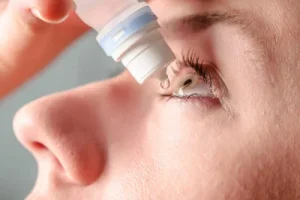
- Use Eye Drops Correctly: Eye drops are an effective remedy for dry eyes when used correctly. When applying them, form a pocket in the lower lid and be careful not to use too many drops to avoid overflow and infection. Before application, wash your hands and avoid contact of the bottle tip with your eye or skin.
If these tips do not bring improvement, it might be helpful to visit an eye doctor for further treatment options. A targeted treatment of the causes of dry eyes is the most effective way to achieve long-term relief!

To reduce the side effect of dry eyes caused by LASIK eye laser surgery, we recommend our patients the new SMILE technique (Relex Smile / Smile PRO). This method is not only gentler, as it interferes less with the structure of the cornea, but also offers faster recovery time. Additionally, the risks of postoperative dryness are lower. We offer this advanced laser eye treatment at very attractive prices to make access to this innovative technology easier for our patients. This way, it is possible to achieve excellent vision correction while minimizing the risk of unwanted side effects.
Lasikwelt Eye Laser Center Cologne


