Deutsch
LASIK Laser eye surgery
LASIK is the second generation laser eye surgery for correcting refractive vision problems.
Free info kit
Free quick check


LASIK is the second generation laser eye surgery for correcting refractive vision problems.
Free info kit
LASIK was the most well-known eye laser surgery performed to correct vision problems. Laser-Assisted In Situ Keratomileusis (LASIK) is a very effective alternative to glasses or contact lenses.
In eyes with normal vision, the cornea bends—or refracts—light precisely onto the fovea which is the most sensitive part of retina. But in cases of nearsightedness, farsightedness, or astigmatism, light is refracted incorrectly. This improper refraction causes blurry vision.
During the LASIK surgery, a special type of cutting laser is used to change the shape of the cornea. The cornea is the dome-shaped, transparent tissue at the front of the eye.
Glasses or contact lenses can correct vision, but reshaping the cornea through laser refractive surgery provides the necessary refraction to correct vision.
LASIK surgery can be an option to correct these vision problems:

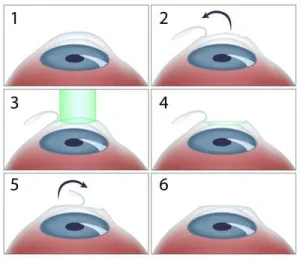
First, your LASIK surgeon will use a small surgical instrument called a microkeratome or an advanced and very precise femtosecond laser to create a very thin, superficial flap in your cornea.
The surgeon then folds back the hinged flap to access the underlying cornea (called the stroma) and removes some corneal tissue with an excimer laser.
Excimer lasers produce a cool ultraviolet light beam to remove (ablate) microscopic amounts of tissue from the cornea, reshaping it so that light entering the eye is more accurately focused onto the retina for improved vision.
After the laser ablation reshapes the cornea, the flap is laid back in place, covering the area where the corneal tissue was removed. The flap seals to the underlying cornea during the healing period after surgery.
For LASIK, only topical anesthetic drops are required, and no bandages or stitches are needed.
Types of LASIK surgery that only relate to the creation of the corneal flap during the procedure.
 The LASIK is performed with a blade:
A microkeratome, which is a specialized surgical instrument equipped with an oscillating thin blade, is specifically designed to create a corneal flap during the LASIK procedure.
In traditional LASIK, the surgeon utilizes this mechanical device, known as a microkeratome, to carefully and precisely create the necessary corneal flap.
This creation of the corneal flap is a crucial step in the LASIK process, as it allows for the subsequent reshaping of the cornea with the excimer laser to correct refractive vision errors.
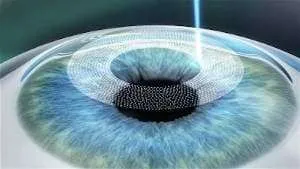 All-laser LASIK, also known as bladeless LASIK, is a vision correction procedure that enhances the safety and precision of traditional LASIK.
FemtoLASIK uses the femtosecond laser, a highly precise and accurate type of laser, to create CO2 bubbles and separate corneal tissue without making cuts or incisions. Thanks to the femtosecond laser, a corneal flap is created more safely.
Once the flap is created, the Femto LASIK process is the same as with LASIK, i.e., the excimer laser is used to correct the refractive error. After the action of the excimer laser is completed and the refractive error is corrected, the flap is placed back onto the cornea. One of the main advantages of this operation is that the femtosecond laser minimizes the chances of complications during and after the surgery.
The main differences between LASIK and Femto LASIK are in the use of the femtosecond laser for creating the corneal flap:
 A LASIK surgery is typically completed in less than 20 minutes. During the procedure, you will lie on your back in an adjustable chair. You may receive medication to help you relax. After numbing drops are put in your eye, your doctor will use an instrument to hold your eyelids open.
A suction ring will be placed on your eye just before the corneal flap is cut. This may cause a feeling of pressure, and your vision might dim a little.
Your eye surgeon will use a small blade or a cutting laser to cut a small hinged flap away from the front of your eye. Folding back the flap allows your doctor to access the part of your cornea that needs reshaping.
Using a programmed excimer laser, your eye surgeon reshapes parts of your cornea. With each pulse of the laser beam, a tiny amount of corneal tissue is removed. Once the cornea has been reshaped, the surgeon repositions the flap back into place. The flap heals without stitches.
During the surgery, you will be asked to focus on a light point. Focusing on this light helps keep your eye steady while the laser reshapes your cornea. You might notice a distinct smell as the laser removes corneal tissue. Some people describe the smell as similar to burnt hair.
If you need LASIK surgery on both eyes, doctors generally perform the procedure on the same day.
Immediately after the surgery, your eye may itch, feel gritty, burn, and be watery. Your vision will likely be blurry. Generally, you will experience little pain, and your vision will mostly recover quickly.
You may receive pain medication or eye drops to ensure comfort for several hours following the procedure. Your eye doctor will also ask you to wear a protective shield over your eye at night until your eye heals.
After the surgery, you will be able to see, but your vision is not expected to be clear immediately. Although vision typically becomes good within a few days after LASIK, it may take up to 2 to 3 months for your eye to fully heal and your vision to stabilize. Your chances of improved vision partly depend on how good your vision was before the surgery.
You will have a follow-up appointment with your eye doctor 1 to 2 days after the surgery. This is to see how your eye is healing and to check for any complications.
It may take several weeks before you can use cosmetics around your eyes again. You may need to wait a few weeks before resuming strenuous activities such as contact sports, swimming, or using hot tubs.
Follow your doctor’s recommendations on how soon you can return to your usual activities.
 If you’re tired of wearing glasses or contact lenses, you might be considering whether LASIK surgery is a suitable option for you.
Typically, the majority of people who undergo laser-assisted in situ keratomileusis (LASIK) eye surgery achieve 20/20 vision or better, which is adequate for most daily activities. However, many people still eventually need glasses for driving at night or reading as they age.
The LASIK surgery has a good track record.
Complications are uncommon, and the majority of patients are pleased with the outcomes. Certain side effects, particularly dry eyes and temporary visual disturbances (such as glare), are quite common. These usually disappear after a few weeks or months, although some people consider them a long-term problem.
Your results will depend on your specific refractive error and other individual factors. People with a low degree of nearsightedness tend to have the most success with refractive surgery. People with a high degree of myopia or hyperopia, along with astigmatism, tend to have less predictable outcomes.
In some cases, the surgery may result in undercorrection. If this happens, you may need another surgery to achieve the correct correction.
Researchers from the U.S. and Germany recently conducted a literature review of 97 peer-reviewed clinical studies on LASIK vision correction, published between 2008 and 2015.
Nearly 68,000 LASIK-treated eyes and 30 different laser systems were examined in these studies.
Results of this analysis showed:
It’s better to keep in mind that as eye laser technology and methods continue to advance, the complication and side effect rates of laser eye surgery keep decreasing.
MORE information about laser eye surgery results
Complications that lead to a loss of vision are very rare. However, certain side effects of LASIK are common. These include dry eyes and temporary visual disturbances such as glare. These symptoms usually disappear after a few weeks or months.
MORE information about laser eye surgery side effects and complication
Some surgeons believe that creating a flap during LASIK carries a slightly higher risk compared to procedures that do not involve a flap. Depending on your circumstances and preferences, you might consider:
The LASIK procedure (Laser-assisted in situ keratomileusis) is a method of eye laser surgery used to correct vision problems such as myopia, hyperopia, and astigmatism.
The costs for a LASIK treatment in Germany can vary significantly and depend on various factors. On average, the prices for a LASIK treatment per eye range between 1,000 and 2,000 euros. It is important to note that these costs are incurred individually for each eye, which means that treating both eyes will double the cost. Due to the relatively higher likelihood of problematic complications, traditional LASIK is not performed at the Lasikwelt Eye Laser Center.
The stated costs for a LASIK treatment should ideally cover all necessary steps of the procedure, including pre-examinations, the actual laser treatment, and post-operative check-ups. Some clinics offer packages that include additional services such as guarantees for follow-up corrections. It is advisable to find out in advance which services are included in the price.
In Germany, LASIK treatment is usually not covered by statutory health insurance as it is considered a cosmetic procedure. However, some private health insurance plans may offer coverage or partial coverage. Additionally, many clinics offer financing plans or installment payments to ease the financial burden for patients.
Deciding on LASIK treatment is not just a matter of cost but should also consider the potential improvement in quality of life through better vision. It is important to thoroughly research and choose a clinic with a good reputation for safety, successful treatments, and patient satisfaction. A thorough preliminary examination and consultation with the treating doctor can help make the best decision for your individual needs.
In the modern world of eye laser treatments, traditional LASIK has become less popular due to complications associated with the flap. As mentioned earlier, the primary serious problems with traditional LASIK are related to the use of blades in flap creation. To prevent these complications, the femtosecond laser has been widely used in the ophthalmic world for over 20 years. At Lasikwelt, we are committed to using the best technology and methods available worldwide. Therefore, we do not perform the old-fashioned and problematic traditional LASIK (blade LASIK). Instead of traditional LASIK, we offer our patients the safer and more modern Femto-LASIK method for 1250 euros per eye. The option of financing at 24 euros per eye/per month is also a very attractive offer from Lasikwelt Eye Laser Center Cologne.
 Comprehensive Care
Individuals treated at the Lasikwelt Eye Laser Center experience continuous, comprehensive care by Lasikwelt ophthalmologists from evaluation to post-operative follow-ups, rather than transferring post-operative care to another eye care provider.
The Lasikwelt Eye Laser Center is committed to the best available technology in the world for laser refractive eye corrections and continually updates its equipment to the most advanced technology. The eye surgeons at Lasikwelt are experts in all types of eye laser surgeries. Your eye specialist will discuss with you the technique that best suits your situation.
Lasikwelt places a high value on a thorough evaluation to ensure you are a good candidate for this type of surgery. This careful examination, combined with the use of the latest eye laser technology and techniques such as Smile PRO, Presbyond, and FemtoLASIK, helps ensure quality results for laser vision correction.
The experienced ophthalmologists at Lasikwelt are specially trained in eye laser surgeries. The eye surgeons at Lasikwelt have been performing laser-assisted in situ keratomileusis (LASIK) and a variant called photorefractive keratectomy since 1995, and each surgeon performs more than 2,000 state-of-the-art eye laser surgeries annually.
Lasikwelt always offers very reasonable and affordable prices for laser eye surgery methods. There are also very attractive financing options.
Please contact your insurance company to verify medical coverage and obtain necessary authorization before your visit. The customer service phone number of your insurance company is often printed on the back of your insurance card.
Make an appointment for a non-binding and free quick test now to free yourself from your visual aids. If you need additional information, please request our free information package by filling out the form.