
 Deutsch
Examination Before Laser Eye Surgery
The main goal of the pre-examination is to determine if you are suitable for laser eye surgery and which procedure is best for you.
Free info kit
Free quick check


The main goal of the pre-examination is to determine if you are suitable for laser eye surgery and which procedure is best for you.
Free info kit
 The main purpose of the pre-examination is to assess your eligibility for laser eye surgery and identify the most suitable procedure for your specific needs. We will inform you about why laser eye surgery is or isn’t suitable for you and the benefits and risks associated with this type of surgery.
Before the LASIK surgery, we help you understand what results you can expect after the procedure based on your specific values and individual circumstances. Remember, the pre-examination does NOT obligate you to proceed with the procedure.
Switch your contact lenses for your glasses.
To prepare for the LASIK treatment, you need to switch your contact lenses for glasses several weeks before the treatment.

Do not use makeup, perfume, lotions, cologne, or aftershave on the day of your treatment.
Wear warm, layered clothing and closed-toe shoes. Do not wear sandals or flip-flops. Make sure your clothing is comfortable enough to sleep in, so you do not have to change when you get home. Do not wear any accessories in your hair.
Since you will not be able to drive immediately after your surgery, make sure to bring a friend or family member to drive you home.
 Just before your LASIK appointment, have a light snack or small meal to prevent hunger during or after the procedure.
You need to rest after your LASIK treatment. Therefore, it is best to avoid caffeine or other sugary foods or drinks that make it difficult for you to sleep after the surgery. Drinking water helps keep your eyes moist, ensuring your eyes are comfortable after the treatment.
Besides preparing for LASIK, have your antibiotic and anti-inflammatory eye drops on the day of the LASIK surgery.

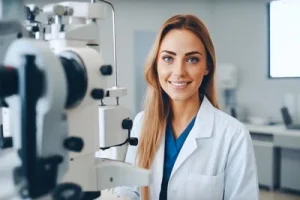
Before the procedure, visual acuity with and without glasses is recorded. Your muscle balance, pupil size, and dominant eye are also measured. Once pupil dilation has occurred, a more thorough examination of the eyes is conducted. The doctor will inspect the tear film, corneas, lenses, retinas, and optic nerves to rule out any disease because only healthy eyes are suitable for refractive surgery. The condition of your cornea and intraocular pressure will be assessed.
Following the examinations, the doctor will discuss your eye health and possible surgical procedures with you. If surgery is planned, a staff member will inform you about pre- and post-operative guidelines. Adhering to these guidelines contributes to the best possible results. A consultant will explain the costs and financing options and schedule the treatment date with you.
 Pupil Measurement
The size of your pupils in dim light is crucial for assessing the quality of your night vision after refractive surgery. Therefore, the method of measuring pupil size during the pre-examination is important. Previously, a flashlight or similar light source was used, and the pupil was compared to a circular template, which was not precise enough. Modern techniques for pupil measurement use light expansion or infrared technologies to accurately measure the size of the pupils under low light conditions without artificially constricting the pupil. After the measurement, the question arises whether the laser treatment will cover the entire pupil field under low light conditions and thus maximize the quality of night vision.
Every cornea has fine irregularities that are often not detectable even under a high-resolution microscope. Corneal topography is a crucial factor in deciding whether a patient can benefit from refractive surgery and is often the critical point for planning follow-up corrections or additional treatments to achieve optimal vision results. There are various systems for measuring the shape, structure, and thickness of the cornea, providing the doctor with different perspectives and types of information.
Lamellar corneal flap surgery has been used for many years, starting with keratomileusis to treat myopia over 60 years ago. With the development of lasers, flap surgery has become a more precise procedure. One lesson learned from flap surgery is to ensure that the cornea is not thinned too much, as this can cause irregularities that impair vision. Therefore, precise measurement of corneal thickness before surgery is crucial. Knowing the thickness of the flap to be formed, the amount of tissue to be removed can be calculated to maintain a safe thickness of untouched tissue. The Femto-LASIK technique allows the surgeon to ensure maximum safety for the patient. This technology enables consistently thinner and more uniform flaps than is possible with a microkeratome or blade. This technique is especially beneficial for patients with stronger vision corrections or a thinner corneal structure. Indeed, the advanced SMILE laser technology for eye surgery offers additional advantages for thin corneas. Since no flap is cut in this procedure, the cornea remains firmer and more robust.

LASIK patients often suffer from dry eyes before the surgery, which often delays the healing process after LASIK surgery. Since the cornea is the main treatment site for refractive laser surgery and has no blood vessels, it is nourished by the tear film on its surface and the intraocular fluid. The pre-ocular tear film acts as an interface between the cornea and the environment, creating a smooth, high-quality refractive surface that ensures clear vision and contains natural substances that protect against infection.
If pre-examinations and tests indicate dry eyes, this can be treated by your doctor before the surgery. Regular use of preservative-free artificial tears and ointments applied at night are usually the first-line therapy. Various combinations of drops and medications may be used. An alternative is punctal plugs, which effectively block the tear drainage system and thus keep the eye moist for longer. It has been shown that patients experience fewer dryness issues after FemtoLASIK than those who have undergone conventional LASIK treatment.
 The SMILE method (Small Incision Lenticule Extraction) represents an advanced alternative to LASIK, especially for patients with dry eyes. This minimally invasive technique requires only a small incision to remove a thin, lens-shaped piece of the cornea – unlike the need for a corneal flap in LASIK. Since fewer corneal nerves are severed during SMILE, which are important for tear production, the risk of dryness after surgery is reduced. This can keep the tear film stable and thus improve the healing process and comfort after the procedure. Therefore, SMILE is often the preferred choice for patients who already suffer from dry eyes before surgery or have an increased risk of developing dry eyes. Additionally, SMILE offers similar or even better refractive results compared to LASIK, making it an attractive choice for many patients.
The cycloplegic examination is performed for two main reasons before refractive surgery. First, dilation drops allow the ophthalmologist a complete eye examination, as they provide a clear view of the retina and internal eye structures – important to ensure that these are healthy before surgery. The other reason concerns accommodation, the process that allows the eyes to focus on nearby objects. When viewing up close, the lens in the eye curves due to muscle contraction, causing temporary myopia. This can affect the measurements during the refraction determination, creating the illusion of higher myopia or lower hyperopia than is actually present.
This is where the dilation drops come in. Substances like Cyclogyl or Mydriacyl not only cause pupil dilation but also relax the muscles that influence the shape of the lens in the eye. An accurate determination of the degree of myopia or hyperopia is only possible in the state of complete muscle relaxation. It is often found that patients are less myopic in this state than initially thought. This precise measurement improves the likelihood of achieving a consistent and unchanged vision correction through laser treatment.
There are also drops for pupil dilation that only dilate the pupil without relaxing the lens muscles. While pupil dilation is essential for examining the internal eye structures, relaxing the lens muscles provides crucial information to ensure a more precise treatment for the patient.

Suitability for Laser eye surgery>>>
At LASIKWELT, you have the option to take advantage of a free quick-check that gives you an initial indication of whether you are likely to be a suitable candidate. Only after the medical pre-examination will you have absolute certainty in this regard.
If our ophthalmologist determines that you are not a good LASIK candidate today, you could still become one in the future. The technology for laser eye surgery is constantly improving, so people with higher and more challenging values can become good LASIK candidates at a later date. However, laser eye surgery is not suitable for everyone, and some patients (those with certain eye conditions affecting the cornea and retina) will never be good candidates. The best way to find out is a thorough, non-binding laser eye pre-examination at the LASIKWELT Eye Laser Center.


