
 Deutsch
FemtoLASIK Laser Eye Surgery
FemtoLASIK represents a modern and advanced version of the traditional LASIK eye laser surgery.
Free info kit
Free quick check
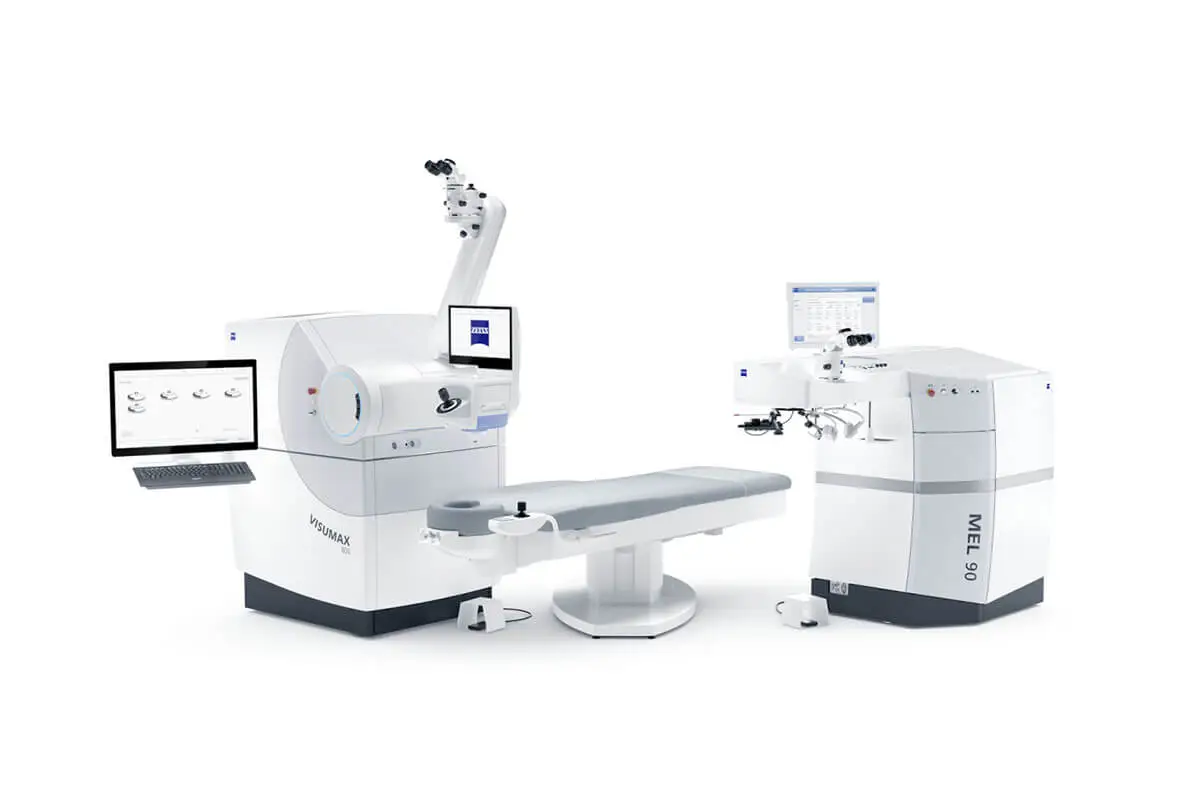

FemtoLASIK represents a modern and advanced version of the traditional LASIK eye laser surgery.
Free info kit
Femto-LASIK is an advanced form of LASIK eye surgery designed to correct refractive errors such as myopia (nearsightedness), hyperopia (farsightedness), astigmatism (irregular curvature of the cornea), and presbyopia (age-related farsightedness). The main difference from traditional LASIK is that Femto-LASIK uses a femtosecond laser instead of a mechanical microkeratome (a surgical instrument) to create a thin corneal flap. This process is highly precise and minimizes the risk of complications during the flap cut.
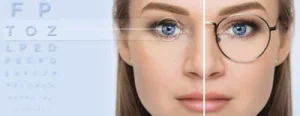
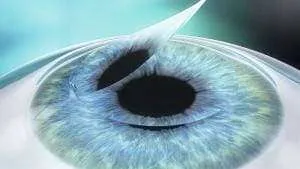
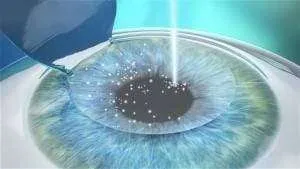
After the flap is created, it is gently lifted to expose the underlying corneal tissue. A second laser, the excimer laser, is then used to precisely reshape the cornea, correcting the refractive error. After reshaping, the flap is repositioned, where it heals without stitches.
The advantages of Femto-LASIK over traditional LASIK include higher precision in flap creation, reduced likelihood of flap-related complications, potentially faster healing, and improved safety. Because the femtosecond laser enhances control and accuracy of the procedure, Femto-LASIK may also be suitable for patients who are not candidates for traditional LASIK due to thin corneas or other factors.
Both LASIK (Laser-Assisted In-Situ Keratomileusis) and Femto-LASIK are procedures for correcting vision problems like myopia, hyperopia, or astigmatism, but they differ in the technology and method used to create the corneal flap.

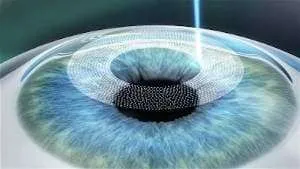
FemtoLASIK

In bladeless LASIK—also known as bladeless LASIK, all-laser LASIK, or Femto-LASIK—your LASIK surgeon uses two types of lasers for vision correction.
First, an ultra-fast femtosecond laser creates a thin flap in the cornea (the clear front surface of the eye). Then, an excimer laser reshapes the underlying corneal tissue to correct your vision. Then, the flap is repositioned to its original position, and the side of the flap is absorbed with a sterile sponge to create initial adhesion
The Femto-LASIK procedure is a modern and gentle method to correct refractive errors. By using state-of-the-art technology and the extensive experience of our doctors, we offer our patients particularly precise and safe treatment.
In Femto-LASIK, a special laser first creates a flap in the upper layer of the cornea. This flap is a very thin and even disc of corneal tissue that sits like a lid on the cornea. This flap provides access to the underlying corneal tissue, which can be reshaped with the excimer laser to correct refractive errors such as myopia, hyperopia, astigmatism.
The advantage of the flap is that it acts like a natural protective shield on the cornea, enabling faster and less disturbed healing. The flap is gently repositioned after the correction and adheres to the cornea on its own.
In around 140,000 operations per year, German laser eye surgeons treat refractive errors with the laser. With a patient satisfaction rate of over 95 percent, Laser-In-Situ Keratomileusis (LASIK) is one of the most successful surgical procedures ever.
Femto-LASIK with thin flaps uses a fully computer-controlled femtosecond laser system to precisely and safely create ultra-thin flaps in the first step of the LASIK procedure.
The femtosecond laser eliminates the need for a surgical instrument with blades (a so-called microkeratome) to create the corneal flap. In all-laser LASIK, no surgical blade is required.
 The suitability for a FemtoLASIK operation corresponds precisely to the suitability for other types of laser eye surgery.
In summary:
During the operation, you will not feel any pain and will be guided by your surgeon.
Femto-LASIK not only offers the advantage of patient comfort (knowing that no blade is used on the eye) but also:

LASIK treatments are highly effective, with most patients achieving excellent vision correction. However, like any medical procedure, there is a small risk of complications, which can be short-term or long-term. In rare cases, problems can even be permanent.
However, you shouldn’t worry, as LASIK complications are very rare. According to the Eye Surgery Education Council (ESEC), established by members of the American Society of Cataract and Refractive Surgery (ASCRS), less than 1% of LASIK patients experience serious problems (source: Eyeworld). This demonstrates that LASIK treatments are generally very safe.
FemtoLASIK is proven to be a safe and effective procedure for vision correction. Flap complications—mostly associated with traditional LASIK using a microkeratome blade but rarely also with FemtoLASIK—can occur in very small numbers. Some possible complications include eye infections, chronic dry eyes, and issues with the LASIK flap. Fortunately, most of these complications can be treated and heal within a few months.
Furthermore, studies show that LASIK complications decrease with the experience of the doctors, and technology is continually advancing.
Ultimately, the risk of complications also depends on your overall health. Patients with certain conditions, such as diabetes, may have a higher risk of complications. Therefore, it is important to inform our specialists about your health condition and ask any questions you may have. It is also important to note that each patient responds differently to the treatment, and the healing process can vary for each individual
The costs for a FemtoLASIK procedure in Germany vary depending on the clinic’s location, the surgeon’s reputation and experience, and the specific needs and conditions of the patient. On average, the prices for a FemtoLASIK treatment range between €1250 and €2500 per eye. This price range can vary depending on the complexity of the vision correction and the extent of follow-up care.

Lasikwelt offers a flat rate for Femto-LASIK treatment at €1250 per eye. No hidden additional costs—the stated price includes everything. Personal factors such as different vision impairments or corneal thickness do not affect the final price. Financing options for Smile PRO are also available, starting at €24 per month per eye. These costs cover not only the surgical procedure but also the careful pre- and post-operative care, the use of the latest technologies, and customized treatment plans tailored to the individual needs of each patient. Lasikwelt also offers a five-year follow-up guarantee for the Femto-LASIK operation.
In addition to the immediate surgery costs, patients should also consider potential additional costs for pre-examinations, follow-up care, and possible corrections. Many clinics offer financing models that allow for installment payments of treatment costs to ease the financial burden.
Choosing FemtoLASIK is not only a matter of quality of life but also a financial consideration. Prospective patients should seek comprehensive advice and obtain cost estimates from multiple clinics to find the best option for their specific needs. Despite the initial costs, FemtoLASIK represents a worthwhile investment in the future of many people’s vision.
Is Femto-LASIK painful?
Before the LASIK operation, you will be given eye drops to numb your cornea during the procedure, ensuring a painless experience. During the first step of LASIK, the creation of the corneal flap, you may feel slight pressure on the eye, but it is not painful and only lasts briefly. After the operation, there may be mild discomforts such as light sensitivity, watery eyes, or a foreign body sensation, which usually subside within a few hours. If these discomforts are bothersome, over-the-counter pain relievers can be used for relief. Many patients report little to no pain after the operation, especially after a recovery period of sleep. If severe pain occurs, it is advisable to consult an eye doctor.
How long does a Femto-LASIK procedure take?
The actual laser treatment usually takes less than 1 minute, with the entire process taking approximately 10-15 minutes per eye.
How long does the result of a Femto-LASIK treatment last?
In most cases, the improved vision from LASIK surgery is permanent. However, in a limited number of cases—usually due to changes in the eye, with or without LASIK treatment—myopia, hyperopia, and/or astigmatism can recur, causing blurred vision. If such regression occurs, a LASIK enhancement can usually be performed to improve vision.
At our laser eye center LASIKWELT Cologne, we are fully specialized in laser correction treatments for refractive errors such as myopia (nearsightedness), hyperopia (farsightedness), astigmatism (irregular curvature of the cornea), and presbyopia (age-related farsightedness). Our experienced doctors and state-of-the-art equipment guarantee a successful Femto-LASIK treatment. Femto-LASIK is one of the safest treatment methods for laser eye corrections. With it, we can precisely correct your refractive error and enable you to have perfect vision.
Schedule a free and non-binding quick-check appointment now to say goodbye to your glasses. If you need more information, fill out the form to receive a free information package. Or simply, you can call us at Tel: 0221 2725 3333.


