
 Deutsch
ReLEx SMILE Pro or LASIK: What Is the Difference?
SMILE Pro or LASIK – which procedure is more advanced, and which is better suited to your eyes?
Free info kit
Free quick check


SMILE Pro or LASIK – which procedure is more advanced, and which is better suited to your eyes?
Free info kit
The cornea and the eye’s natural lens focus incoming light to create a sharp image on the retina. In myopia, hyperopia or astigmatism, light is not focused optimally on the retina.
Laser eye surgery changes the shape of the cornea and therefore its refractive power. The aim is to reduce the refractive error and achieve the best possible vision without glasses or contact lenses.

PRK/LASEK, LASIK/FemtoLASIK and SMILE represent three stages in the development of refractive corneal surgery. All are clinically established, but they differ considerably in how the cornea is accessed, the healing process and their respective advantages and limitations.
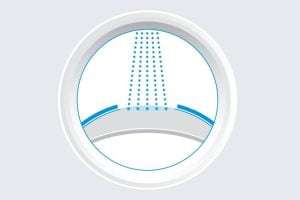
In PRK/LASEK, the corneal epithelium is removed from the surface or moved aside. An excimer laser then reshapes the underlying corneal tissue. No flap is created. The procedure may be an option when a flap-free method is preferred or when anatomical factors make LASIK unsuitable. Visual recovery is generally slower than after FemtoLASIK or SMILE.
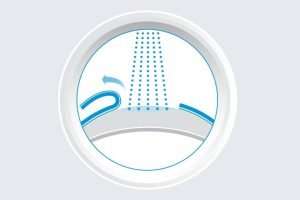
Since the 1990s, LASIK has been one of the most frequently performed procedures worldwide for correcting myopia, astigmatism and hyperopia. In modern FemtoLASIK, a femtosecond laser creates a thin corneal flap. After the flap has been lifted, an excimer laser reshapes the underlying tissue; the flap is then repositioned.
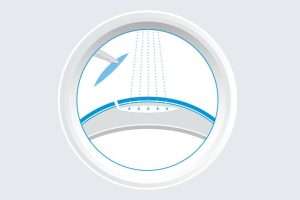
ReLEx SMILE and SMILE Pro correct refractive errors without creating a flap. The femtosecond laser forms a precisely calculated lenticule within the cornea, which is removed through an incision only a few millimetres wide. Performed with the ZEISS VISUMAX 800, SMILE Pro is the latest development of this minimally invasive technique.
| Feature | SMILE Pro | FemtoLASIK |
|---|---|---|
| Access | Small incision, no flap | Creation of a corneal flap |
| Laser technology | One femtosecond laser | Femtosecond laser plus excimer laser |
| Flap-related risks | Eliminated because no flap is created | Rare, but possible |
| Dry eye | Often less pronounced during the early healing phase | Temporary symptoms may be somewhat more pronounced |
| Visual recovery | Rapid, but sometimes slightly slower initially | Usually very rapid |
| Particular strength | Minimally invasive, flap-free and well suited to sport and an active lifestyle | Long-established and suitable for a broad range of corrections |
 Refractive errors treated
Both SMILE Pro and LASIK/FemtoLASIK can correct myopia and astigmatism. FemtoLASIK has also been used to treat hyperopia for many years. More recently, selected hyperopic corrections have been added to the potential treatment range of SMILE Pro. The actual range that can be treated depends on the approved treatment profile, the measured values and the individual anatomy of the cornea. Early clinical data on hyperopic SMILE are promising, but long-term experience remains more limited than for hyperopic LASIK. Current pilot study on hyperopic SMILE treatment.
Before your procedure is planned, a comprehensive ophthalmological preoperative examination for laser eye surgery is required. This includes assessing the shape and thickness of the cornea, the tear film, pupil size and the stability of the refractive error. The eyes must also be healthy. Conditions that could interfere with postoperative healing, such as autoimmune disorders, must be considered carefully. Treatment should be postponed during pregnancy and breastfeeding because hormonal changes may cause fluctuations in vision.
Once the appointment has been arranged, preparation on the day of surgery is similar for SMILE and LASIK/FemtoLASIK. Anaesthetic eye drops are applied. An instrument keeps the eyelids open while a contact glass stabilises the eye during laser treatment. The treatment data are planned using the preoperative measurements. The procedure itself, however, differs significantly because SMILE requires neither a flap nor an excimer laser.
Both procedures are quick and, including preparation, usually take only a few minutes per eye. With the VISUMAX 800, lenticule creation during a standard myopia treatment can take less than ten seconds. Technical information about the VISUMAX 800. After surgery, the prescribed eye drops should be used consistently and all scheduled follow-up appointments should be attended. The aim of both methods is to achieve the best possible uncorrected visual acuity; however, a specific outcome cannot be guaranteed.
 Procedure
LASIK/FemtoLASIK and SMILE are both multi-step procedures. In conventional LASIK, a thin corneal flap is created with a microkeratome; in FemtoLASIK, it is created with a femtosecond laser. The flap is lifted and the cornea is reshaped with an excimer laser. It is then repositioned and acts as the eye’s own natural wound dressing during healing.
In SMILE, the femtosecond laser creates two precise interfaces within the middle layer of the cornea, the stroma. Together they form a thin corneal lenticule. The lenticule is carefully separated and removed through a small side incision. This changes the shape and refractive power of the cornea without creating a large flap.
The principal difference between LASIK/FemtoLASIK and SMILE Pro is therefore the way the cornea is accessed: FemtoLASIK uses a flap, whereas SMILE Pro uses a small incision.
FemtoLASIK uses two laser systems: a femtosecond laser to create the flap and an excimer laser to reshape the cornea. SMILE Pro requires only the VISUMAX 800 femtosecond laser. Its 2 MHz pulse frequency enables lenticule creation in less than ten seconds during standard treatments. Assistance systems also support centration and cyclotorsion compensation.
The postoperative course after LASIK/FemtoLASIK and SMILE is generally similar. Functional visual recovery is usually rapid. Vision may be slightly clearer on the first day after FemtoLASIK, whereas after SMILE it may continue to improve over several days in some patients. Whether driving is safe after 24 hours must be assessed individually at the follow-up examination. Full stabilisation may take several weeks to months with either procedure.
Both procedures generally achieve very good visual and refractive outcomes in carefully selected patients. Undercorrection or overcorrection, regression, halos, glare and dry-eye symptoms can occur after either method. If a residual refractive error remains, an enhancement may be considered, although it is not possible or appropriate in every case.
Complications and side effects after LASIK/FemtoLASIK or SMILE occur mainly during the early healing phase and often resolve over time. Because SMILE does not require a flap and tends to affect fewer anterior corneal nerves, comparative clinical studies have shown more favourable tear-film and dry-eye parameters during the first few months in some cases. These differences often become smaller later on. Randomised comparative study of SMILE, LASIK and dry eye.
Flap-related complications cannot occur after SMILE because no flap is created. This is an important advantage for people involved in contact or combat sports and for those with a higher risk of eye injury.
Possible flap-related complications after LASIK/FemtoLASIK include:

One key advantage of SMILE is the small incision. While FemtoLASIK requires an almost circular flap, SMILE uses only a side incision a few millimetres wide. As a result, larger areas of the anterior corneal structure and superficial nerve network remain untouched.
This may be beneficial for the tear film, especially during the early postoperative phase. Dry-eye symptoms are still possible after SMILE, but comparative clinical studies frequently show faster recovery of certain tear-film and corneal nerve parameters than after FemtoLASIK. A further prospective study reported more favourable short-term findings for several dry-eye and nerve parameters after SMILE. Prospective study of dry eye and corneal nerves.
Another advantage is the absence of flap-related complications. Because there is no flap, it cannot be displaced or develop folds. This is particularly relevant for physically active patients and people whose occupation may expose the eyes to mechanical impact.
SMILE also has a plausible structural concept with regard to the biomechanical stress on the cornea: the anterior corneal lamellae are preserved over a larger area. Comparative measurements suggest that certain biomechanical properties may remodel more favourably after SMILE than after LASIK. This does not mean that corneal ectasia can be ruled out completely; careful preoperative diagnostics remain essential. Comparative study of corneal healing and biomechanics after SMILE and LASIK.
SMILE Pro for hyperopia: Hyperopic lenticule extraction has undergone further technical development in recent years. Current treatment profiles and early clinical studies show promising results. However, less long-term evidence is available than for hyperopic FemtoLASIK. The decision should therefore be made particularly carefully, taking the corneal shape, centration, refractive error and the applicable regulatory approval into account.
Both SMILE and LASIK/FemtoLASIK are established procedures for correcting refractive errors. Patient satisfaction is high after both methods. LASIK/FemtoLASIK has a longer clinical track record and offers a broad range of individually adjustable excimer-laser profiles. SMILE Pro, by contrast, is the more advanced, minimally invasive and flap-free procedure.
SMILE Pro avoids the creation of a corneal flap, requires only a small incision and may preserve more of the anterior corneal nerves and structures. This eliminates flap-related complications and may reduce the early impact on the tear film. Nevertheless, FemtoLASIK remains an excellent alternative when the individual treatment profile or anatomical findings favour it. The safest decision is not simply to choose the newest procedure, but to select the method that best matches the findings of a comprehensive examination.
Prospective comparative studies demonstrate high efficacy and safety for both procedures, although individual aspects of visual quality and early recovery may differ. Randomised prospective comparative study of SMILE and LASIK.
Whichever method you choose, it is important to follow all postoperative instructions and attend the scheduled follow-up appointments. This provides the best possible support for healing and the treatment outcome.

Your ophthalmologist can explain the differences between LASIK and SMILE in relation to your individual eyes. LASIKWELT Laser Eye Centre Cologne has extensive experience with FemtoLASIK, ReLEx SMILE, SMILE Pro and PRESBYOND. During your consultation, your eyes will be examined comprehensively and you will receive an individual recommendation based on the findings. We will also explain our laser eye surgery costs and financing options. We look forward to welcoming you.

Medically reviewed and last updated on 14 September 2026.


